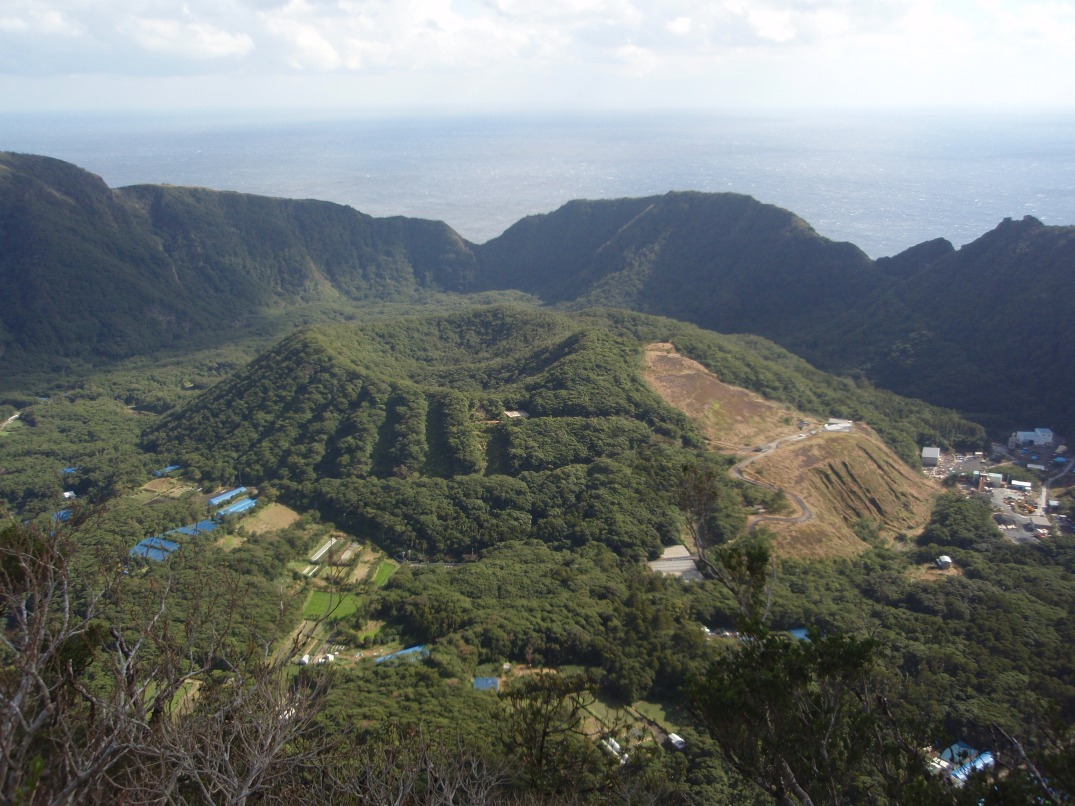
Aogashima Island
Aogashima is a small volcano island with a rare double caldera.
piggybackjapan.com
Aogashima Island
SaveContains ads | Our order isn't influenced by ads ▶ How we make money ▶ How we choose places
Aogashima is a small volcano island with a rare double caldera.
Its crater floor has a free geothermal steam oven, and ferries and helicopters reach it only from Hachijojima island, 70 km away.
MoreWhat kind of place
In 1785 an eruption sent about 200 islanders fleeing to Hachijojima, leaving the island empty; a monument honors Sasaki Jirodayu, who brought them back. Today 161 people live there (October 2024), mostly in the village on the rim of the outer crater.
With kidsThe part that matters
The village calls the geothermal steam oven in Ikenosawa, on the crater floor, free for anyone, around the clock.
It sits by the sauna, closed after typhoon damage; whether the oven is affected is unconfirmed, though a May 2026 hiking record describes steam cooking. Eggs steam in 20 to 30 minutes, the village says.
Maruyama, the inner cone island children call "Pudding", has a loop the village puts at 20 minutes (others say 30 to 60). After dark the crater is black apart from starlight, and the Milky Way shows.
By age0-1 / 2-3 / 4-6
Not checked yet
By weatherRain, heat, cold
- Rainy dayIn the sauna area where the oven sits, a gazebo with a table and chairs is listed as shelter from a sudden shower, though no source says whether it stays open while the sauna is closed. Maruyama's loop trail gets slippery after rain, so skip it with a small child on wet days; thick fog also often forms in the crater. On any day, a few narrow ridge sections have no safety rope, so keep hold of a small child there.
- Hot dayThe village sits above 250 m, which feels a little cooler than Hachijojima, but the streets keep rising and falling, and an August 2011 visitor found even short walks slow and sweaty.
- Cold dayTemperatures stay between 10 and 25°C all year, and in winter the ground around the sauna is faintly warm in places, so stargazing works even in midwinter. Whales sometimes appear close to the harbor in winter.
How was it with your kids?
Not greatGreat
- Elevatorchecked, no recordElevator:checked, no record
- Stroller OKchecked, no recordStroller friendly:checked, no record
- RentalStroller rental:not checked
- Nursingchecked, no recordNursing space:checked, no record
- Changingchecked, no recordDiaper changing table:checked, no record
- Family WCFamily restroom:with conditionsconditions
- Kids' toiletKids' toilet seat & step stool:with conditionsconditions
- Own foodOutside food allowed:with conditionsconditions
- EnglishEnglish support:none
Not yet checked: 3
Lost-child support, Diaper disposal bin, Official family-friendly certification
* Not at this spot — nearest options (1)
- Stroller friendly: not at the spot itself. We read 194 pages and found 1 nearby instead.
- The helicopter (Tokyo Airlands Shuttle) checks a stroller into the cargo hold free of charge if it fits the hold's size and weight limits; it does not go into the cabin, and it may be refused depending on that day's other checked bags. source
Green = we confirmed it. Gray = not checked yet. Gray with a line through = the place does not have it. Gray with “checked, no record” under it = we looked, but found no record of it.
Aogashima Island · Links & reads ▾
Where it is
The village office address is 100-1701, Aogashima-mura, Tokyo, with no street number (the whole island has no street numbers).source
Before you go
- There is no direct ferry or flight to Aogashima, so everyone goes through Hachijojima, and the ferry from there runs only 50–60% of the time; each day's sailing is decided at 7:00 a.m. (information line 04996-9-0033).
- Keep a spare day: the village says bad weather can leave visitors unable to leave for several days, and one August 2011 visitor found the ship canceled for a week after a typhoon. Seas are calmer in spring and autumn, and the ferry needs no advance ticket. With a small child, note that the island clinic (04996-9-0123) holds outpatient hours only on weekdays, 9:00-13:00; outside them, calls are forwarded to medical staff.
- The helicopter takes about 20 minutes from Hachijojima, but it has only 9 seats and costs 11,750 yen one way. Reservations open on the same date one month ahead (not Sundays), 9:00–16:00 at 04996-2-5222, and check-in closes 30 minutes before departure. You cannot transfer from the ferry to the helicopter.
- Over 5 kg of luggage costs extra per kilo, and bags that do not fit the cargo hold are refused; the village does not say whether strollers count, so ask Toho Aviation (04996-2-5200) before you go.
- Book your room before you travel: the village requires an inn or campsite reservation first, the village counts only six minshuku (family-run inns), and one of them is currently closed, and boarding can be refused if your booking cannot be confirmed. Call the inn directly, ideally in Japanese, and ask about meals, since the island has no restaurant and most inns serve three meals a day; for the steam oven, the village suggests asking an inn to prepare the ingredients. Ajisai-so takes reservations from around one month before the stay as a guide (phone weekdays 9:00–17:00, email also possible).
- There are no buses or taxis, and the walk from the crater floor up to the village, shop and heliport takes about an hour. Some inns offer guest pickup (ask whether it also covers trips down to Ikenosawa), or you can rent a car from one of two companies; travel guides say you need an International Driving Permit and a confirmed inn booking, and they disagree on whether a campsite booking alone qualifies. Bring cash, because sources disagree on whether cards work: Ajisai-so lists cards and QR payments, Aogashimaya accepts neither e-money nor credit cards (only electronic Shimapo currency), and Suginosawa is cash only. Expect very little English: the village's camping notice asks, among other things, for an interpreter to come along.
- Ikenosawa has no drinking water, so fill containers at the tap in front of the village office. The village's sightseeing page lists the sauna as closed for now after typhoon damage (it also shut on April 18, 2026 for equipment failure), so check with the village office (04996-9-0111, weekdays 8:30–17:15) before counting on it; the sauna's own line, 04996-9-0203, is answered only during opening hours (weekdays 16:00–20:00, weekends and holidays 14:00–20:00, closed Wednesdays, per the village facilities page).
Sources and evidence (56)
- GO TOKYO presents Aogashima as an island for outdoor vacations (the "Indoor / outdoor" slot: outdoor).source
- English is hard to find on the island; the village's camping notice, speaking of the island, asks among other things for an interpreter to accompany visitors.source
- GO TOKYO puts the total fare from Tokyo to Hachijojima and Aogashima at about 15,000–36,000 yen by ship or 11,000–42,000 yen by air (a range covering both islands; it changes monthly with fuel surcharges).source
- The helicopter (Tokyo Airlands Shuttle, Toho Aviation) needs a reservation, and boarding check-in closes 30 minutes before departure.source
- The village requires an inn or village campsite reservation before you come to the island, made directly with the inn.source
- One travel guide says visiting the island and renting a car require a confirmed inn (or campsite) booking.source
- The helicopter (Tokyo Airlands Shuttle) flies 365 days a year, seats 9 passengers and takes about 20 minutes from Hachijojima; reservation required.source
- There are no buses or taxis on the island.source
- There is no direct ferry or flight from Tokyo or anywhere else; you go through Hachijojima.source
- The village office address is 100-1701, Aogashima-mura, Tokyo, with no street number (the whole island has no street numbers).source
- The village office phone is 04996-9-0111.source
- The ferry Kuroshio Maru is canceled in bad weather; its service rate is 50–60%.source
- Whether the ferry runs on a given day is decided at 7:00 a.m. that morning.source
- The ferry information line is 04996-9-0033.source
- Helicopter reservations open one month before the same date, except Sundays.source
- Helicopter reservations are taken from 9:00 to 16:00.source
- Toho Aviation is at 04996-2-5200 and the reservation center is 04996-2-5222.source
- Helicopter luggage over 5 kg carries an extra charge per kilo.source
- Large bags that do not fit the helicopter cargo hold cannot be carried, so ask Toho Aviation beforehand.source
- You cannot transfer from the ferry to the helicopter.source
- The island has only six minshuku (family-run inns), who cannot take a surprise booking after you arrive.source
- Boarding may be refused if your inn booking cannot be confirmed.source
- Book each inn directly.source
- Ferry service is not daily, and bad weather can keep visitors on the island for several days.source
- There are no restaurants on the island, only an izakaya (pub) that opens in the evening.source
- Most inns include three meals; ask each inn about room-only stays or other meal arrangements.source
- From Ikenosawa, where the campsite is, to Okabe, where the shop, village office and heliport are, it is about an hour's walk uphill.source
- Ikenosawa, where the campsite, sauna and steam oven are, has no drinking water, so bring your own.source
- You can fill containers at the tap in front of the village office.source
- The Fureai Sauna is closed for now after typhoon damage, according to the village sightseeing page.source
- The village facilities page gives the sauna's hours as weekdays 16:00–20:00 (entry until 19:00), weekends and holidays 14:00–20:00, closed Wednesdays; the sightseeing page says it is closed for now (#76).source
- The sauna's phone number is 04996-9-0203, answered during opening hours only.source
- For the steam oven, the village presents asking an inn to prepare eggs, sweet potatoes, kusaya and other ingredients as a way to enjoy it.source
- For injury or illness call the Aogashima Clinic, 04996-9-0123; outside hours the call is forwarded to medical staff.source
- The clinic (first floor of Ojare Center) holds general outpatient hours Monday to Friday, 9:00 to 13:00.source
- The village office is open Monday to Friday, 8:30 to 17:15, and closed on weekends and holidays.source
- Temperatures stay between 10 and 25°C year-round.source
- Aogashimaya does not accept e-money or credit cards; only electronic Shimapo currency works there.source
- Inn Ajisai-so lists credit card and QR payments as accepted.source
- Ajisai-so takes reservations from around one month before the planned stay as a guide (phone weekdays 9:00–17:00, email also possible).source
- Minshuku Suginosawa is cash only.source
- Minshuku Matsumi-so is currently closed.source
- Some inns pick guests up (for example Aogashimaya, Kaiyu-maru and Oyado Tametomo).source
- The helicopter cannot carry bags that do not fit the cargo hold; the village does not say whether strollers count.source
- The island has two rental car companies (Aogashima Rent-a-Car and Ikenosawa Rent-a-Car).source
- One guide says cards and IC cards are not accepted on the island, so bring cash.source
- Very little English is spoken on the island, including at inns and the shop.source
- Inn bookings are by phone, preferably in Japanese.source
- Renting a car needs an International Driving Permit.source
- Spring and autumn seas are calmer; summer typhoons and winter swells increase cancellations.source
- The ferry needs no ticket reserved in advance.source
- The helicopter has only 9 seats and fills quickly.source
- The helicopter costs 11,750 yen one way.source
- Another travel guide says you cannot rent a car without an inn booking on the island; campsite stays do not qualify.source
- On April 18, 2026 the sauna was closed for equipment failure.source
- One August 2011 visitor found the ferry canceled for a week because of a typhoon.source
Basics
- Fee: GO TOKYO puts the total fare from Tokyo to Hachijojima and Aogashima at about 15,000–36,000 yen by ship or 11,000–42,000 yen by air (a range covering both islands; it changes monthly with fuel surcharges).source
- Booking: The helicopter (Tokyo Airlands Shuttle, Toho Aviation) needs a reservation, and boarding check-in closes 30 minutes before departure.source
Once you've decided
evidence & sources (6)
- Official: Outside food allowed
- 4travel.jp: Best-fit ages (guide)
- izu-syotou.jp: Best-fit ages (guide)
- tohoair-tal.jp: Best-fit ages (guide)
- tohoair-tal.jp: Best-fit ages (guide)
- Public agency: Family restroom
- gotokyo.org: Indoor / outdoor
- tokyo-islands.com: Outside food allowed
- tokyoislands-net.jp: Kids' toilet seat & step stool
- Official: Outside food allowed
- Official: English support
- Official: main site
| Nursing space | checked, no record | On October 20, 2026, we read the village's official site (sightseeing, lodging, transport, community facilities and notices), the helicopter and ferry operators' official sites, Tokyo's barrier-free facility survey (the port waiting room's entry has no nursing-room item) and Tokyo's baby-care stop page, and travel blogs and reviews, including one by a parent traveling with a baby, and found no record of a place to breastfeed on the island. The village newsletters are PDFs we could not read as text. That means we could not find a record, not that we confirmed there is none. | checked Oct ’26 | ||
|---|---|---|---|---|---|
| Diaper changing table | checked, no record | Tokyo's barrier-free facility survey (as of November 7, 2025) lists no diaper-changing table at the passenger waiting room of the island's port, Sanbo Port. On October 20, 2026, we read the village's official site, the helicopter and ferry operators' sites, Tokyo's survey, map sites' public-restroom listings, and travel blogs and reviews, and found no record of a changing table anywhere else on the island, such as the heliport, the village office, the Fureai Sauna or the guesthouses. Apart from the port waiting room, that means we could not find a record, not that we confirmed there is none. | checked Oct ’26 | ||
| Family restroom | Yes | The passenger waiting room at Sanbo Port has one wheelchair-accessible restroom on the first floor (Tokyo's barrier-free facility survey, as of November 7, 2025). The survey does not say whether it has a baby seat or an adult-size changing bench. We found no record of an accessible restroom in the island's other buildings, such as the heliport, the village office or the Fureai Sauna. | Web-checked | checked Nov ’25 | daredemo-tokyo.metro.tokyo.lg.jp |
| Stroller friendly | checked, no record | On October 20, 2026, we read the village's official site, the helicopter and ferry operators' sites, Tokyo's survey, and travel blogs and reviews, including one by a parent traveling with a baby, and found no record of anyone using a stroller on the island. What we found is that the roads are narrow and hilly, there are steep stone steps at places such as Otonbu and Ozato Shrine, and in a 2014 trip report a parent carried their baby up Otonbu. That means we could not find a record, not that we confirmed there is none. | checked Oct ’26 | ||
| Lost-child supportExtra info — guide only | Not checked yet | ||||
| Indoor / outdoor | Outdoor | Web-checked | checked Dec ’25 | gotokyo.org | |
| Diaper disposal bin | Not checked yet | ||||
| Kids' toilet seat & step stool | Yes | A children's park near the island's school and nursery has a restroom with a child-size toilet (a column on the Tokyo Metropolitan Islands Promotion Corporation's site by a staff member who visited with their children in September 2023). The column does not give the park's official name. We found no record of child toilet seats or step stools in the island's other buildings, such as the port, the heliport or the guesthouses. | Web-checked | checked Dec ’23 | tokyoislands-net.jp |
| Elevator | checked, no record | Tokyo's barrier-free facility survey (as of November 7, 2025) lists no elevator at the Sanbo Port passenger waiting room and a step of under 2 cm at its entrance. On October 20, 2026, we read the village's official site, the helicopter and ferry operators' sites, Tokyo's survey, and travel blogs and reviews, and found no record of an elevator in the island's other buildings, such as the Ojare Center. Apart from the port waiting room, that means we could not find a record, not that we confirmed there is none. | checked Oct ’26 | ||
| English support | No | English is hard to find on the island; the village's camping notice, speaking of the island, asks among other things for an interpreter to accompany visitors. | Web-checked | checked Oct ’26 | vill.aogashima.tokyo.jp |
| Outside food allowed | Yes | The village invites visitors to bring their own food to the geothermal steam oven at Ikenosawa (free, 24 hours), steam it and have a picnic on the spot; the Fureai Sauna beside it has been closed since typhoon damage, and whether the oven is affected is unconfirmed. The island has no diners or restaurants, so lunch ingredients or a boxed lunch come from your guesthouse (ask ahead) or the island's shop. There is no drinking water in the Ikenosawa area, so bring your own. | Web-checked | checked Oct ’26 | vill.aogashima.tokyo.jp12tokyo-islands.com |
| Official family-friendly certificationExtra info — guide only | Not checked yet | ||||
| High chair | checked, no record | On October 20, 2026, we read the village's lodging page (six guesthouses), the official page of Minshuku Kaiyumaru, and travel blogs and reviews, and found no current record of a child's chair at the guesthouses (the island has no diners or restaurants, so meals are taken at your guesthouse). A 2014 trip report mentions one in the dining room of Business Yado Nakazato, which is not on the village's current list, and Tokyo's survey lists no baby chair to lend at the port waiting room, which is not a place to eat. That means we could not find a record, not that we confirmed there is none. | checked Oct ’26 | ||
| Kids' menu | checked, no record | On October 20, 2026, we read the village's lodging page, the official page of Minshuku Kaiyumaru, and travel blogs and reviews, including one by a parent traveling with a baby, and found no record of a children's menu or child rates (the island has no diners or restaurants, and most guesthouses include three meals). The 2014 trip report with a baby says only that the guesthouse's rice and miso soup could be shared with the child. That means we could not find a record, not that we confirmed there is none. | checked Oct ’26 | ||
| Best-fit ages (guide)Extra info — guide only | Yes | A 2014 trip report describes a mother taking her baby, still in diapers and on baby food, to the island by helicopter and staying one night at a guesthouse (the child flew free on her lap). Under the current rules, the Hachijojima–Aogashima ferry is free for children under 1 and for preschoolers traveling with an adult (one per adult), and the helicopter's child fare covers ages 3 to 11. The helicopter fare table says nothing about children under 3, and an adult bringing more than one infant must discuss it when booking. | Web-checked | checked Oct ’26 | izu-syotou.jp4travel.jptohoair-tal.jp12 |