Fukuoka with preschoolers (4–6) 6 spots
Fukuoka is the gateway to Kyushu, and its airport is only a few subway stops from the city centre. Because getting around takes so little time, you can use your arrival day, and go back to the hotel for a nap without losing an afternoon. It suits families who want to cut down on transfers and long journeys.
Kyushu's gateway, with the subway running directly beneath the domestic terminal.
Stroller OK · Nursing room · Changing table · checked Aug ’26
Fukuoka Zoo & Botanical Garden
A zoo and botanical garden in one, with a Ferris wheel over Fukuoka.
Stroller OK · Nursing room · Changing table · checked Sep ’26
An aquarium of Kyushu's own seas, from the deep to a seven-meter open-ocean tank.
Stroller OK · Nursing room · Family restroom · checked Aug ’26
A hands-on science museum built around a 25-meter planetarium dome.
Stroller OK · Nursing room · Changing table · checked Aug ’26
A zoo laid out by habitat, with a 13-meter aviary you walk into.
Stroller OK · Nursing room · Changing table · checked Aug ’26
Ippudo's main ramen shop in Fukuoka, with two bowls named after the store itself.
checked Sep ’26

The subway runs directly beneath the domestic terminal and an elevator takes you the whole way to the platform. There are no stairs to be carried up, so a child can walk to the ticket gate on their own and ride with no transfers: about 6 minutes to Hakata Station, about 12 to Tenjin.On a heavy-luggage day, the nonstop bus to Hakata Station from international terminal stops 6 and 7 saves both the shuttle and the subway transfer; on weekdays from 8 a.m. to 5 p.m. it leaves every 15 minutes, at 00, 15, 30, and 45 past. For legs that give out, strollers are lent at the domestic 1F information counter, from 8 a.m. until the last arrival, in limited numbers.

ZooLab, the animal information house, has two hands-on corners and four hands-on booths, eight skeleton specimens, an animal desk, and a library. Questions about animals are taken at ZooLab's animal consultation corner. From the Ferris wheel at the highest point of the grounds (300 yen a ride) you look out over the city of Fukuoka.The Ferris wheel, merry-go-round, and Astro Metry are 300 yen a ride, and the small rides are 100 yen. Opening hours are 9:00 to 17:00 with last entry at 16:30, closed Mondays (the following day when Monday is a holiday). On weekends and holidays the roads around the zoo jam badly, and on weekends and holidays in the March-May and September-November seasons the car park can fill soon after opening, so come by subway, Nanakuma Line Yakuin-Odori Station (Zoo exit), exit 2, about 15 minutes on foot, or by bus 56 or 58 from Yakuin-Odori, 6 minutes.

On the 3rd floor, Kyushu's Coastal Seas recreates four seas, the East China Sea, the Pacific, the Sea of Japan and the Seto Inland Sea, each keeping its own local character, so they can be compared side by side. Next to it, Kyushu Water Forest follows rain that falls on the mountains, becomes a river and runs to the sea, recreating the life and the settings it passes through. On the 2nd floor, Hone no Oto teaches what is hidden in the shape and size of bones, with commentary built out of sound words. Down on the 1st floor, Kyushu's Deep Sea holds creatures that evolved for cold water, high pressure and low oxygen.For visitors sensitive to light, sound or smell there is a "reassurance map," and for first-timers a "reassurance guide"; both are published as PDFs and handed out at the information counter. Normal hours are 9:30 to 17:30, December to February 10:00 to 17:00, and 9:30 to 21:00 during Golden Week and the summer season, with last entry an hour before closing. A parent who visits on an annual pass stays from the 9:30 opening until about 13:00, three to three and a half hours including the dolphin show and lunch at the restaurant inside.

The 5th-floor main exhibition hall is divided into space, the environment, daily life, living things and the future, all made to be seen and handled; some pieces moved here from Robosquare in Momochihama. The 6th-floor dome theater seats 220 under a 25-meter dome and pairs an optical projector with a digital one, so one show can put up a night sky close to the real thing and then fly out to the edge of the universe, 13.8 billion light years away. On the 4th floor, the Science & Creative Workshop has glass walls, letting visitors watch new exhibits and dome theater programs being built inside.Preschool children with a guardian are free, and elementary and junior high students pay 200 yen each for the exhibition hall and for the dome theater's general programs. Some dome theater programs offer English, Chinese and Korean audio through the Assist Horn infrared hearing system. The museum closes on Tuesdays and from 28 December to 1 January; when a Tuesday is a public holiday it opens and closes the next weekday instead, and it opens daily through the spring, Golden Week, summer and winter school holidays. There is no dedicated parking and the museum asks visitors to come by public transport: it is right outside Exit 3 of Ropponmatsu station on the Nanakuma subway line, about 14 minutes from Hakata station.
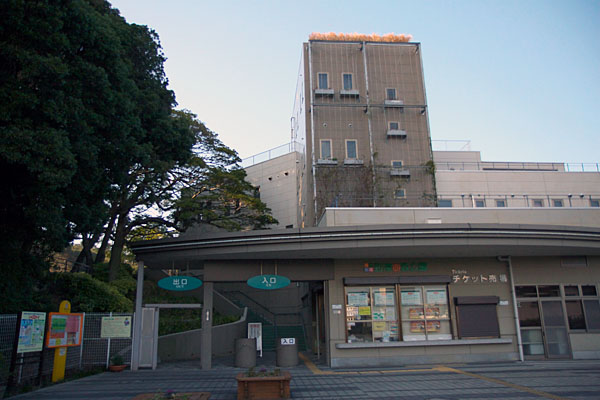
From age 4 a child can ride the Happy Kangaroo (100 cm and taller). The donkey ride is 200 yen for one lap for riders up to 30 kg, and the petting zoo also offers horse riding. The World of Madagascar lowers the wall between people and animals, so you can meet ruffed lemurs and ring-tailed lemurs up close.Rides are 250 yen each, and if you plan on several there is a play ticket book: 1,000 yen buys 1,250 yen worth, from the machines near the Ferris wheel, the children's train and the mini monorail. On the cycle monorail a child under 110 cm cannot ride alone, so an adult rides along. The Sky Flyer (500 yen) is for riders of 20 kg and up. Admission is 100 yen from age 4, and for a packed lunch the park sets out many benches and tables around Shibafu Hiroba.

Three bowls are on the list here — honten shiromaru, honten akamaru and Hakata shoyu ramen — including ones no other Ippudo serves.Akamaru comes with spicy miso, so ask for it left out if they don't take heat. The whole shop is non-smoking. Alongside cash they take credit cards (VISA, Mastercard, JCB, AMEX, Diners Club, DISCOVER, UnionPay), transit IC cards, QR payments and e-money, so you can walk in without yen in your pocket. The phone number, 0570-031-206, is a navi-dial line charged to the caller, and whether it can be reached from an overseas mobile is not stated.