
Sumida Aquarium
An aquarium at the foot of Tokyo Skytree, built so you get close to the animals.
piggybackjapan.com


Sumida Aquarium
SaveAn aquarium at the foot of Tokyo Skytree, built so you get close to the animals.
The penguins here swim in the open, close enough to catch the spray.
MoreWhat kind of place
The aquarium takes up the fifth and sixth floors of the shopping complex at the foot of Tokyo Skytree, and it calls itself an aquarium like a park.
One tank recreates the sea around the Ogasawara Islands, about 1,000 kilometers (620 miles) south of central Tokyo, with roughly 450 fish of some 45 species in it.
The goldfish gallery runs about 100 meters (330 feet) end to end. Around 700 jellyfish of about 14 species are on display at any time, and every one of them was born in this building.
With kidsThe part that matters
The penguin pool is open at the top, so on the sixth floor you stand in the same air as the birds instead of at a pane of glass, close enough that the spray sometimes reaches the walkway.
A child can pick out one bird from up there, then find it again on the fifth floor, from the side and from below.
Ramps and elevators cover the whole indoor route, so you can keep pushing the stroller for the hour and a half the aquarium suggests instead of parking it at the fifth-floor entrance.
Both floors have a baby room with hot water for formula, so you can mix a bottle without hunting for a kettle, and you may bring your own food as long as you sit down to eat it.
Nobody gets paged over a loudspeaker here, so if you are separated, go to the nearest staff member rather than wait for an announcement.
Sources and evidence (6)
- Two floors of a shopping complex; knowing which penguin view is on which floor saves doubling back.source
- Counts you cannot get from the official pages, which give no numbers at all.source
- Posted by the aquarium's own account: "a picnic mood with a home-made bento and a drink".source
- For when rain rewrites the day: other roofed options within reach of the same trip.source
- The new down platform is wider with elevators and escalators, and the new east exit has its own gate and elevators.source
- Ages and prices are stated, so you can tell before you go whether your child can join.source
By age0-1 / 2-3 / 4-6
- Ages 0-1The whole aquarium is indoors, and it states that ramps and elevators let you go right through pushing a wheelchair or a stroller. The penguins swim in the same space as you rather than behind glass, so even a baby in your arms is close enough that spray sometimes reaches you. LED lighting follows the hours of the day: by day a natural brightness with the birds swimming energetically, by night dim light and penguins asleep. There are chairs in front of the tanks, so you can sit and let the moving water surround you.A Baby Rest Room with a hot water sink and a nursing room is on both 5F and 6F, one each, with purified hot water meant for making formula (men may not enter the nursing room). No strollers are lent out, so bring your own. Strollers are the limit of what may be brought in: outdoor carts and other child carriers that are not strollers are not allowed. If you leave it behind, there is a stroller park at the 5F aquarium entrance, outside the aquarium (they take no responsibility for loss or theft, so keep valuables with you). Food and drink may be brought in, and inside you eat sitting on a chair. Children under 3 need no ticket.
- Ages 2-3Every day there is a feeding time, when keepers hand fish to each penguin one by one. One tries to snatch another's share, another cannot manage to eat, and the character of each bird shows plainly (three times a day, about 15 minutes each; it may be cancelled or moved depending on the animals' condition). In the 5.5-meter-wide garden eel tank three species sway together in shoals, and in the roughly 100-meter Edorium about 15 varieties of goldfish can be seen from above as well as from the side. Behind the Ogasawara big tank runs a row of little round windows, the Aqua Scopes, and looking in feels like diving under the sea.There are no public address calls for lost children, so if you are separated, speak to a staff member nearby. No eating while walking; inside you sit on a chair to eat (including anything bought at the aquarium cafe, eaten on the sofas inside). You may go out and come back in, with a re-entry stamp on your hand from the information counter. The entrance is on 5F, and the recommended route says to climb the stairs to 6F first; if you want to avoid steps, read that as the elevator. Children aged 3 and over pay 900 yen; under 3 need no ticket.
- Ages 4-6The jellyfish Big Petri Dish is an oval basin tank seven meters across the long axis, open at the top, so about 500 moon jellies can be watched directly from above rather than through acrylic. Standing on the glass-floored deck that juts out over the tank feels like standing on the surface of a sea with jellyfish drifting below. At the Aqua Base, the kitchen where the animals' food is prepared and the lab where jellyfish are raised are open to view, so work normally done backstage happens right in front of you. The aquarium writes that if an animal catches your interest, you are welcome to talk to a keeper about it.The paid workshops are aimed mainly at elementary school children. Fuwafuwa Kurage is recommended for elementary school age and above, but preschoolers may take part with an accompanying adult, and from age 3 the fee applies (six groups per session, up to two people per group, 1,000 yen per group plus admission, by application). Marugoto Ottosei is for elementary school children. The free workshop Egawari Kingyo runs daily during its period at the Aqua Academy on 5F with same-day sign-up, and no age condition is stated for it (it may end once the places are filled). The official FAQ says it hopes visitors will take about an hour and a half at an easy pace. There are no coin lockers inside.
By weatherRain, heat, cold
- Rainy dayThe whole aquarium is indoors: the official FAQ answers the question of whether anywhere is toured under an umbrella on a rainy day with no, it is all inside. The entrance is on the 5th floor, reached by the aquarium's own elevator, which stands outdoors on the 4th floor of the West Yard, or by escalator.
- Hot dayNot checked yet
- Cold dayNot checked yet
Time needed1.5 h
How was it with your kids?
Not greatGreat
- ElevatorElevator:with conditionsconditions
- Stroller OKStroller friendly:with conditionsconditions
- RentalStroller rental:none
- NursingNursing space:with conditionsconditions
- ChangingDiaper changing table:not checked
- Family WCFamily restroom:with conditionsconditions
- Own foodOutside food allowed:with conditionsconditions
- EnglishEnglish support:with conditionsconditions
* Other not checked (8)
Diaper disposal bin, Kids' toilet seat & step stool, Child switch (rider swap), Diaper changing tables, Microwave, Room privacy, Official family-friendly certification, Quietness (guide)
Green = we confirmed it. Gray = not checked yet. Gray with a line through = the place does not have it.
Worth a look before you go
Japanese · opens translatedGuide
Two floors of a shopping complex; knowing which penguin view is on which floor saves doubling back.
How to walk the two floors: entrance on 5F up the dedicated elevator from 4F, penguins from above on 6F and at eye level on 5F
Japanese · opens translatedGuide
Counts you cannot get from the official pages, which give no numbers at all.
Nursing rooms on both floors, 8 changing tables, no stroller rental — the numbers, listed
Japanese · opens translatedOfficial
Posted by the aquarium's own account: "a picnic mood with a home-made bento and a drink".
The aquarium's own post: bring a home-made meal and eat it inside, picnic-style
Japanese · opens translatedGuide
For when rain rewrites the day: other roofed options within reach of the same trip.
Indoor places across Tokyo and Kanto for a wet day, with this aquarium among them
Japanese · opens translatedGuide
The new down platform is wider with elevators and escalators, and the new east exit has its own gate and elevators.
The nearest Tobu station moved: new down platform, new east exit, new elevators
More to look at
Sumida Aquarium · Links & reads ▾
Where to go next
- Solamachi Tabe-Terrace Food CourtFood courtStroller friendlyNursing spaceDiaper changing table5 min walkA food court at the foot of Skytree: udon, ramen and rice bowls at one table.
- Tokyo SkytreeObservation towerStroller friendlyNursing spaceDiaper changing table5 min walkAt 634 meters, the tallest free-standing broadcast tower in the world.
- National Museum of Nature and ScienceScience museumStroller friendlyNursing spaceDiaper changing table3.0 kmA national museum shown at full size — dinosaur skeletons, a life-size blue whale.
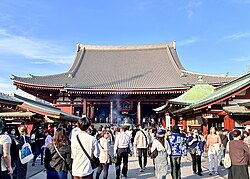
- Senso-jiTempleStroller friendlyDiaper changing tableElevator15 min walkTokyo's oldest temple, approached through a stone-paved shopping street from the great gate.
- Asakusa Imahan Kokusai Street Head RestaurantSukiyaki & shabu-shabuStroller friendlyElevator1.5 kmA sukiyaki and shabu-shabu house in Asakusa since 1895, serving only female black wagyu.
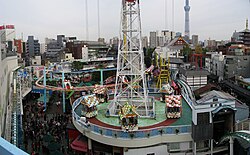
- Asakusa HanayashikiAmusement parkNursing spaceDiaper changing tableElevator1.4 kmA small amusement park, a flower garden in 1853, that calls itself Japan's oldest.



- Solamachi Tabe-Terrace Food CourtFood courtStroller friendlyNursing spaceDiaper changing table5 min walkA food court at the foot of Skytree: udon, ramen and rice bowls at one table.
- Asakusa Imahan Kokusai Street Head RestaurantSukiyaki & shabu-shabuStroller friendlyElevator1.5 kmA sukiyaki and shabu-shabu house in Asakusa since 1895, serving only female black wagyu.
- Tokyo SkytreeObservation towerStroller friendlyNursing spaceDiaper changing table5 min walkAt 634 meters, the tallest free-standing broadcast tower in the world.
- National Museum of Nature and ScienceScience museumStroller friendlyNursing spaceDiaper changing table3.0 kmA national museum shown at full size — dinosaur skeletons, a life-size blue whale.
- Senso-jiTempleStroller friendlyDiaper changing tableElevator15 min walkTokyo's oldest temple, approached through a stone-paved shopping street from the great gate.
Piggyback Japan guides
- A Rainy Day in Tokyo with Small Children
Four indoor places that work when the forecast turns — with the closing days, the reservation traps and the one that will not let a stroller inside.
Where it is
1-1-2 Oshiage, Sumida-ku, Tokyo 131-0045, Japan Tokyo Skytree Town Solamachi 5F/6Fsource2
Before you go
- The penguin pool holds about 350 tons of water and is open at the top, so up on the sixth floor you are in the same air as the Magellanic penguins rather than looking through a pane of glass. You watch from above there, and from the side and from underneath on the fifth. Stand close and the spray sometimes lands on you. The LED lighting follows the hours of a day: bright while they swim by day, dim while they sleep at night.source
- At feeding time the keepers hand each penguin its fish one by one and keep track of who ate what. The personalities come out fast, one bird trying to steal from a neighbor while another can barely get a bite. It happens three times a day, about 15 minutes each, and the fur seals, garden eels, green sea turtles, jellyfish, coral tank and big Ogasawara tank all have a daily feeding too. The aquarium notes that any of them can be moved or dropped depending on how the animals are doing that day.source
More notes (7)
- About 500 moon jellies drift in an open-topped oval basin, roughly 7 meters (23 feet) across at its widest. Because nothing covers the top, you look straight down at the jelly texture and the fine organs inside rather than through acrylic, and you can watch the surface stir as they pulse. A glass-floored deck reaches out over the water, and standing on it feels like standing on the sea itself.source
- The aquarium keeps about 700 jellyfish of some 14 species on display at any time, and every single one of them was born here.source
- Four tanks hold subtropical coral reef life, and you can walk all the way around them. The garden eel tank is 5.5 meters (18 feet) wide, with three kinds of garden eel standing in the sand and swaying together.source
- The big tank recreates the sea around the Ogasawara Islands, about 1,000 kilometers (620 miles) south of central Tokyo, where roughly 450 fish of about 45 species swim in the deep clear blue known as Bonin Blue, reproduced with help from the village there. Small round portholes line the back of the tank, so you can peer in as though you were underwater. The inlet-shaped area beside it is where the baby green sea turtles are.source
- The goldfish gallery, called Edorium, runs about 100 meters (330 feet) and is decorated in an old Edo style. Roughly 15 varieties are on show, wakin, ryukin and ranchu among them, in tanks you look into from the side and from directly above, so the body shapes and the tails read from more than one angle.source
- Aqua Base is an open work area with a kitchen where the day's food is prepared and a lab where the jellyfish are raised, so what usually happens backstage happens in front of you. Keepers weigh out portions after looking at how each animal seems that morning. The lab shows jellyfish from birth through to adult and breeding, and you can ask the staff about any of it.source
- The stated idea is that the closer you get, the more you like them, and the aquarium calls itself an aquarium like a park. You can sit on a chair in front of a tank with the water moving in front of you, or talk over coffee in the cafe while you watch. The staff invite you to come ask about any animal that catches your eye.source
Basics
- Fee:Admission is ¥2,700 for adults, ¥2,000 for high school students, ¥1,400 for elementary and junior high school students and ¥900 for young children, which the aquarium defines as age 3 and over. Children under 3 do not need a ticket. Annual passports for the same four categories are ¥6,000, ¥4,400, ¥3,100 and ¥2,000. With a disability certificate the holder and one companion each pay half the standard price, rounded to the nearest yen; for the annual passport, half the annual fee applies to the holder alone. Junior high and high school students are asked to show their student ID at the ticket countersource2
- Hours:Open 10:00-20:00 on weekdays and 9:00-21:00 on Saturdays, Sundays and public holidays. Last entry is one hour before closing, and the counters stop selling tickets and issuing annual passports at that same time. The aquarium says it is open all year, though it may close temporarily for building inspections — and its official annual calendar does mark occasional closed days (20 January 2027, for example) and days with shortened or extended hours. It also states that opening hours can change with the weather and that maintenance or events may make some times unavailable, and it publishes a day-by-day calendar on the official sitesource23
- Time to allow:1.5 hsource
- Booking:A reservation is not required — same-day tickets are sold at the machines inside the entrance — but the aquarium recommends buying a web ticket in advance. Web tickets are for a set date, or for a set date and time in busy periods, go on sale 30 days before your visit and need a Webket account. Note that when a date or time sells out on the web, the machines do not sell it either, and queues can form at the ticket counter on holidays. An annual passport lets you enter at any time without choosing a timesource234Official booking site ↗
- Note: you can leave and come back — get a re-entry stamp on your hand at the information counter. There are no coin lockers inside; the official FAQ points you to the ones in Tokyo Skytree Townsource
Basics in detail (8)
- You can leave and come back the same day, with a re-entry stamp on your hand from the information counter. There are no coin lockers inside, so the aquarium points you to the ones elsewhere in Tokyo Skytree Town.source
- Hours are 10 a.m. to 8 p.m. on weekdays and 9 a.m. to 9 p.m. on weekends and holidays. Last entry, ticket sales and annual pass sign-ups all close an hour before the doors do. The aquarium is listed as open year-round, but it does close for maintenance now and then (its own calendar marks January 20, 2027, for one), and it runs shorter and longer days as well. It posts a day-by-day calendar, because weather, events or maintenance can change the hours.source
- Admission is 2,700 yen for adults, 2,000 yen for high school students, 1,400 yen for elementary and junior high students and 900 yen for children aged 3 and up. Under-3s are free. Annual passes run 6,000, 4,400, 3,100 and 2,000 yen in the same brackets. A disability certificate gets the holder and one companion in at half the general price, rounded to the yen, with the annual pass half price for the holder alone. Junior high and high school students show a student ID at the ticket counter.source
- Booking is not required and you can buy at the machines inside, but the aquarium recommends buying online first. Web tickets open 30 days ahead, are sold by date (and by time slot in busy periods) and need a Webket account. If a slot sells out online it is not sold at the machines either, and weekends can mean waiting in line to buy. Annual pass holders walk in whenever they like.source
- A paid jellyfish workshop called Fuwafuwa Kurage is suggested for elementary school age and up. It takes six groups per session with up to two people in each, costs 1,000 yen per group on top of admission, and has to be booked. Younger children can come along with a parent, and from age 3 there is a charge for them.source
- A paid fur seal workshop called Marugoto Ottosei is for elementary school students. It takes six per session on a first-come basis and costs 1,000 yen per group on top of admission.source
- A paid goldfish workshop called Irohani Kingyo is suggested for fourth grade and up but open to anyone. It takes 12 per session on a first-come basis and costs 1,000 yen a person on top of admission. Elementary age and younger need a parent with them, and the adult does not need to buy a ticket.source
- A free workshop called Egawari Kingyo runs at the Aqua Academy on the fifth floor, where you fold and slot paper together to make a goldfish that turns from a top view to a side view to a head-on view as you flip it. It runs every day during its season, you sign up on the spot, and it costs nothing beyond admission. Unlike the paid workshops, no age condition is given. It can close early once the places are gone.source
Once you've decided
evidence & sources (14)
- Official: Stroller friendly, Nursing space, Indoor / outdoor
- Official: Stroller friendly, Nursing space, Family restroom
- Official: Steps & slope caution, Stroller access notes
- Official: Elevator, Stroller access notes
- Official: English support
- Official: Stroller friendly
- Official: main site
This aquarium inside Tokyo Skytree Town is designed around a single idea: getting close to the animals. Penguins swim in a two-story open pool seen from above, beside and below — a splash can reach you. Moon jellies drift in an open-topped basin you peer straight down into. Staff hand-feed the penguins one by one, and the kitchen and jellyfish lab work in full view. The aquarium likens itself to a park, with seats by the tanks to settle into.
| Stroller friendly | Yes | You can keep pushing your stroller through the aquarium — the official accessibility page says gentle slopes and elevators let wheelchairs and strollers move through without trouble. What a stroller may not be swapped for: the aquarium's terms of use list, among the things you cannot bring in, large luggage, trolleys, and any child-carrying vehicle other than a stroller, naming outdoor wagons as the example; entering on a skateboard, roller skates, a kick scooter or a bicycle is not allowed either. If you would rather leave the stroller, there is a stroller area at the 5F aquarium entrance, outside the paid area; the aquarium does not take responsibility for loss or theft there, so take your valuables with you | Web-checked | checked Aug ’26 | sumida-aquarium.comsumida-aquarium.comsumida-aquarium.com |
|---|---|---|---|---|---|
| Diaper changing table | Not checked yet | ||||
| Nursing space | Yes (2) | Two baby rooms, one on 5F and one on 6F, each with a sink with hot water and a nursing room. Men cannot enter the nursing room itself | Web-checked | checked Aug ’26 | sumida-aquarium.comsumida-aquarium.com |
| Indoor / outdoor | Indoor | Entirely indoors. Asked whether any part of the visit is walked under an umbrella on a rainy day, the official FAQ answers that there is none — all of it is inside | Web-checked | checked Aug ’26 | sumida-aquarium.com |
| Family restroom | Yes (3) | Three restrooms — two on 5F and one on 6F — and each has one multi-purpose room attached. All three multi-purpose toilets have ostomate fittings and are built to be used from a wheelchair | Web-checked | checked Aug ’26 | sumida-aquarium.comsumida-aquarium.com |
| Diaper disposal bin | Not checked yet | ||||
| English support | English menu & signs | Signs inside the aquarium are in English, and the cafe has an English menu as well as a Japanese one | Web-checked | checked Aug ’26 | sumida-aquarium.comsumida-aquarium.com |
| Outside food allowed | Yes | You may bring your own food and drink. Take your trash home with you, sit down to eat rather than eating as you walk, and eat what you buy at the cafe on the sofas inside as well. Groups bringing packed lunches are asked to contact the aquarium in advance | Web-checked | checked Aug ’26 | sumida-aquarium.com |
| Kids' toilet seat & step stool | Not checked yet | ||||
| Elevator | Yes | Elevators connecting the floors are placed around the aquarium. Before you go in there is also an aquarium-only elevator, outdoors on the 4th floor of the West Yard | Web-checked | checked Aug ’26 | sumida-aquarium.comsumida-aquarium.com |
| Stroller rental | No | The aquarium has no strollers to lend and points visitors to the services in Tokyo Skytree Town, the complex it sits in | Web-checked | checked Aug ’26 | sumida-aquarium.com |
| Child switch (rider swap) | Not checked yet | ||||
| Steps & slope caution | Barrier-free | The aquarium says it uses universal design throughout so that everyone can enjoy it, and that gentle slopes and elevators let you keep pushing a wheelchair or a stroller. One thing to translate for yourself: the recommended route on the official floor map starts by climbing the stairs to 6F after you enter. If you are avoiding steps, take the elevator up instead | Web-checked | checked Aug ’26 | sumida-aquarium.comsumida-aquarium.com |
| Nursing rooms | Yes (2) | Two nursing rooms with hot water, one on 5F and one on 6F | Web-checked | checked Aug ’26 | sumida-aquarium.com |
| Diaper changing tables | Not checked yet | ||||
| Hot water for formula | Yes | The baby rooms have filtered hot water for making up formula | Web-checked | checked Aug ’26 | sumida-aquarium.comsumida-aquarium.com |
| Fathers welcome | Some areas not allowed | Men cannot enter the nursing room itself. Whether a father may use the rest of the baby room is not stated either way on the official site — what is written as off-limits is the nursing room | Web-checked | checked Aug ’26 | sumida-aquarium.com |
| Microwave | Not checked yet | ||||
| Room privacy | Not checked yet | ||||
| Lost-child supportExtra info — guide only | Yes | The aquarium does not page lost children over the PA system. If you lose sight of your child, speak to the nearest member of staff | Web-checked | checked Aug ’26 | sumida-aquarium.com |
| Stroller access notesExtra info — guide only | Yes | The entrance is on 5F: come up by the aquarium's own elevator, outdoors on the 4th floor of the West Yard, or by escalator. The stroller area is at that 5F entrance, outside the paid area. Once inside, the route goes up to 6F and comes back down to 5F through the kaleidoscope tunnel. There are no coin lockers inside the aquarium | Web-checked | checked Aug ’26 | sumida-aquarium.comsumida-aquarium.comsumida-aquarium.com |
| Official family-friendly certificationExtra info — guide only | Not checked yet | ||||
| Quietness (guide)Extra info — guide only | Not checked yet |