
Tokyo Sea Life Park
An aquarium of over 500 species, built around a 2,200-cubic-meter doughnut tank of bluefin tuna.
piggybackjapan.com


Tokyo Sea Life Park
SaveAn aquarium of over 500 species, built around a 2,200-cubic-meter doughnut tank of bluefin tuna.
Children stay glued to the penguin area, one of Japan's largest, where the world's smallest fairy penguins waddle past.
MoreWhat kind of place
Tokyo Sea Life Park is an aquarium inside Kasai Rinkai Park in Edogawa Ward, about 20 minutes by train from Tokyo Station.
The entrance is a glass dome, and inside are more than 500 species, from oceans around the world to the rivers and shorelines closer to home.
At its center is a doughnut-shaped tank holding 2,200 cubic meters of water, where bluefin tuna circle in a school.
In April 2026, this aquarium and the three other zoos and aquariums run by the Tokyo metropolitan government were added to Japan's official museum register.
Sources and evidence (39)
- For hot water for formula, ask staff at the information counter, the restaurant, or the ticket office.source
- Restaurant staff will warm baby food in a microwave if you ask.source
- Every Western-style toilet in the main building has a child-size seat that sits on top of the regular one.source
- Strollers are not available to rent.source
- You can take a stroller inside the building.source
- There is no stroller parking inside the building; the only place to leave one is at the ticket office.source
- Some exhibits can only be reached by stairs: the tanks down the steps in the Penguin Life area, the walkway up the steps in the Tokyo Sea area, and the bioluminescent life exhibit.source
- Fifteen wheelchairs are available to borrow, at the main gate, the ticket office, and the information counter on the second floor of the main building.source
- A calm-down space where people with sensory sensitivity can rest is next to the escalator on the second floor of the main building.source
- Sensory items such as ear defenders are lent out free and first come, first served at the information counter on the second floor of the main building.source
- A quieter stretch of the day with sound and light turned down is held six times a year, from 1:00 to 4:30 p.m.source
- There is a first aid room, and a nurse treats minor injuries when one is on duty.source
- Drink vending machines are in the rest house beside the main gate and on the restaurant terrace.source
- The restaurant keeps a list of the allergens in its dishes.source
- Souvenirs are sold at the Aqua Marine gift shop on the second floor of the main building and at Aquascape, just inside the main gate.source
- Coin lockers are in two places: inside the rest house beside the main gate, and next to the reference room on the second floor of the main building.source
- A small coin locker costs 200 yen and measures 34 cm wide, 29 cm high, and 42 cm deep.source
- There is no bag check counter, so use the coin lockers.source
- Coin lockers can be used until 5:00 p.m.source
- au Wi-Fi SPOT, Wi2 300, and TOKYO FREE Wi-Fi are available in the aquarium.source
- There is nowhere to charge a phone or camera, and the aquarium asks visitors to arrive with theirs charged.source
- There is no smoking area, and the whole aquarium is nonsmoking.source
- Flash, lighting gear, tripods, and monopods are not allowed, but family photos and photos of the animals need no permission.source
- Assistance dogs, meaning guide dogs, hearing dogs, and service dogs, may come in with you.source
- If you need to leave and come back the same day, speak to staff at the gate or at the information counter inside.source
- The animal-touching program is suspended for the time being, with no date set for its return.source
- The aquarium stands inside Kasai Rinkai Park.source
- You can meet more than 500 species from oceans around the world and from the rivers and shorelines of everyday life.source
- The glass dome at the entrance catches your eye.source
- Bluefin tuna swim as a school in a doughnut-shaped tank holding 2,200 cubic meters of water.source
- You can watch penguins swimming around in one of the largest penguin exhibits in Japan.source
- The exhibit areas include the Arctic and Antarctic Seas, the Aqua Theater, and Life on the Shore.source
- The exhibit areas include the Coral Reef, Tuna: Voyagers of the Open Sea, Seas of the World, and Life in the Deep Sea.source
- The exhibit areas include the Tide Pool, Penguin Life, Life in Fresh Water, and the Seaweed Forest.source
- You can watch the tuna, the penguins, and the seabirds being fed.source
- Visitors do not feed the animals themselves.source
- Spot guides explain the animals in detail, and the feeding-time guide lets you listen while watching them eat.source
- In hot weather the aquarium points out the spots inside where visitors can cool off.source
- In April 2026 the four zoos and aquariums run by the Tokyo metropolitan government were added to Japan's official museum register.source
With kidsThe part that matters
Saturdays, Sundays, and holidays are the busy days here, so check the crowd forecast the aquarium posts for each day and you can pick a quieter one.
Children stop at the penguin exhibit, one of the largest in Japan, where the world's smallest penguins waddle and swim.
You can bring your own lunch into the restaurant if you tell a staff member, who will also warm baby food or pour hot water for formula.
There are no strollers to rent, so bring your own and take it inside with you rather than leaving it at the ticket office.
One family with a five-year-old and a two-year-old got through it in just under two and a half hours, lunch at the restaurant included.
Sources and evidence (4)
- Sunday, ages 5 and 2: 11:00 start, tuna then penguins in an hour, lunch at noon, stroller left at the door.source
- Parents' photos and notes: the nursing room is on 1F outside the gate; borrow the key at the counter. No hot water.source
- A summer drive: inside stays properly cool, but the penguin enclosure is in full sun. Parking 300 yen the first hour.source
- Measured on 4 May: 100+ queuing back to the station at 9:20, 15 minutes to get in, restaurant nearly full by 11:30.source
By age0-1 / 2-3 / 4-6
- Ages 0-1Strollers are allowed inside, so your baby can stay in the seat as you go round. In the doughnut-shaped main tank holding 2,200 cubic meters of water, bluefin tuna swim past in a school. At the penguin exhibit, one of the largest in Japan, the penguins swim right by.There are two nursing rooms: the rest house beside the main gate and the 2nd floor of the main building. Only women may enter the rest house nursing room; the 2nd floor has three mamaro baby care booths, and men should ask staff about using the main building room. For formula, ask staff at the information counter, the restaurant, or the ticket office for hot water, and ask restaurant staff if you need baby food warmed in a microwave. Diaper changing tables are in every restroom in the park. No strollers are lent, so bring your own, and since the only stroller parking is at the ticket office, plan to push it through the exhibits.
- Ages 2-3There are galleries of familiar waterside life, among them Tide Pool, Creatures of the Shore, and Life in Freshwater. You can watch feeding time for the tuna, the penguins, and the seabirds. Admission is free through 6th grade.The hands-on touch program is suspended for now with no restart date, and visitors do not feed the animals. If touching was the draw, time your visit around feeding time or a spot guide instead. Child toilet seats are fitted on every Western-style toilet in the main building. Sensory goods such as ear muffs are lent free, first come first served, at the information counter on the 2nd floor of the main building, and a calm down space for a rest sits beside the escalator there.
- Ages 4-6More than 500 species from seas around the world and from waters close to home. At feeding time a guide explains while the animals eat, so a child can watch and listen at once. The galleries are named by place, such as Deep Sea, Bioluminescence, Arctic and Antarctic Seas, and Coral Reef, so a child can pick which sea to visit next.Admission is free through 6th grade; adults pay 700 yen. Three spots need stairs: the tank display below the stairs in Penguin Ecology, the passage above the stairs in The Sea of Tokyo, and Bioluminescence. A Sunday visit with a 5- and a 2-year-old (2025) took just under two and a half hours including lunch at the park restaurant. Packed lunches can be eaten in the restaurant if you tell a staff member, and on a rainy day the roofed places to eat are part of the restaurant and the rest house by the main gate.
By weatherRain, heat, cold
- Rainy dayThe exhibits are inside the main building, and you can bring a stroller in. On a rainy day, the roofed places to eat a packed lunch are part of the restaurant and the rest house beside the main gate.
- Hot dayNot checked yet
- Cold dayNot checked yet
Time needed2.5 h
How was it with your kids?
Not greatGreat
- ElevatorElevator:with conditionsconditions
- Stroller OKStroller friendly:with conditionsconditions
- RentalStroller rental:none
- NursingNursing space:with conditionsconditions
- ChangingDiaper changing table:with conditionsconditions
- Family WCFamily restroom:with conditionsconditions
- Kids' toiletKids' toilet seat & step stool:with conditionsconditions
- Own foodOutside food allowed:with conditionsconditions
- EnglishEnglish support:with conditionsconditions
* Other not checked (8)
Diaper disposal bin, Indoor / outdoor, Child switch (rider swap), Steps & slope caution, Official family-friendly certification, Best-fit ages (guide), Quietness (guide), Lost-child support
Green = we confirmed it. Gray = not checked yet. Gray with a line through = the place does not have it.
Worth a look before you go
Japanese · opens translatedFirst-hand
Sunday, ages 5 and 2: 11:00 start, tuna then penguins in an hour, lunch at noon, stroller left at the door.
Recommended with preschoolers: Tokyo Sea Life Park in about two and a half hours, lunch included
Japanese · opens translatedFirst-hand
Parents' photos and notes: the nursing room is on 1F outside the gate; borrow the key at the counter. No hot water.
Tokyo Sea Life Park: the nursing rooms and diaper-change tables — reviews and photos
Japanese · opens translatedFirst-hand
A summer drive: inside stays properly cool, but the penguin enclosure is in full sun. Parking 300 yen the first hour.
A quick drive out to Tokyo Sea Life Park (and it was wonderfully cool inside)
Japanese · opens translatedFirst-hand
Measured on 4 May: 100+ queuing back to the station at 9:20, 15 minutes to get in, restaurant nearly full by 11:30.
[Kasai-Rinkai-Koen station] We went to Tokyo Sea Life Park: how busy 4 May was, plus hints for school projects
Tokyo Sea Life Park · Links & reads ▾
Where to go next
- teamLab Planets TOKYONursing spaceDiaper changing tableFamily restroom6.0 kmA digital art museum in Toyosu that you enter barefoot and walk through water.
- Pokémon CafeCharacter cafeStroller friendly8.5 kmThe first permanent Pokémon cafe, in a department store near Tokyo Station.
- Tokyo DisneylandTheme parkStroller friendlyNursing spaceDiaper changing table2.0 kmSeven themed lands and 37 attractions, only five of which set a minimum height.
- MiraikanScience museumStroller friendlyNursing spaceDiaper changing table7.5 kmJapan's national museum of emerging science, hands-on throughout.
- Solamachi Tabe-Terrace Food CourtFood courtStroller friendlyNursing spaceDiaper changing table8.8 kmA food court at the foot of Skytree: udon, ramen and rice bowls at one table.
- Tokyo SkytreeObservation towerStroller friendlyNursing spaceDiaper changing table8.7 kmAt 634 meters, the tallest free-standing broadcast tower in the world.


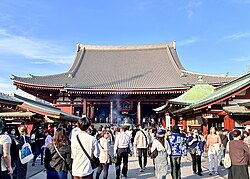
- Senso-jiTempleStroller friendlyDiaper changing tableElevator9.8 kmTokyo's oldest temple, approached through a stone-paved shopping street from the great gate.
- Asakusa Imahan Kokusai Street Head RestaurantSukiyaki & shabu-shabuElevator9.9 kmA sukiyaki and shabu-shabu house in Asakusa since 1895, serving only female black wagyu.
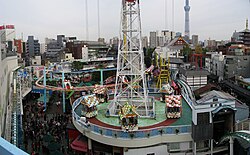
- Asakusa HanayashikiAmusement parkNursing spaceDiaper changing tableElevator9.9 kmA small amusement park, a flower garden in 1853, that calls itself Japan's oldest.
- Sumida AquariumAquariumStroller friendlyNursing spaceElevator8.8 kmAn aquarium at the foot of Tokyo Skytree, built so you get close to the animals.
- Kani Doraku Ginza HatchomeCrab restaurantDiaper changing tableElevatorFamily restroom8.9 kmA crab restaurant by Shimbashi Station, with kaiseki courses that run to nine dishes.


- Pokémon CafeCharacter cafeStroller friendly8.5 kmThe first permanent Pokémon cafe, in a department store near Tokyo Station.
- Solamachi Tabe-Terrace Food CourtFood courtStroller friendlyNursing spaceDiaper changing table8.8 kmA food court at the foot of Skytree: udon, ramen and rice bowls at one table.
- Asakusa Imahan Kokusai Street Head RestaurantSukiyaki & shabu-shabuElevator9.9 kmA sukiyaki and shabu-shabu house in Asakusa since 1895, serving only female black wagyu.
- Kani Doraku Ginza HatchomeCrab restaurantDiaper changing tableElevatorFamily restroom8.9 kmA crab restaurant by Shimbashi Station, with kaiseki courses that run to nine dishes.
- teamLab Planets TOKYONursing spaceDiaper changing tableFamily restroom6.0 kmA digital art museum in Toyosu that you enter barefoot and walk through water.
- MiraikanScience museumStroller friendlyNursing spaceDiaper changing table7.5 kmJapan's national museum of emerging science, hands-on throughout.
- Tokyo SkytreeObservation towerStroller friendlyNursing spaceDiaper changing table8.7 kmAt 634 meters, the tallest free-standing broadcast tower in the world.
- Senso-jiTempleStroller friendlyDiaper changing tableElevator9.8 kmTokyo's oldest temple, approached through a stone-paved shopping street from the great gate.
- Sumida AquariumAquariumStroller friendlyNursing spaceElevator8.8 kmAn aquarium at the foot of Tokyo Skytree, built so you get close to the animals.
- Tokyo DisneylandTheme parkStroller friendlyNursing spaceDiaper changing table2.0 kmSeven themed lands and 37 attractions, only five of which set a minimum height.
- Asakusa HanayashikiAmusement parkNursing spaceDiaper changing tableElevator9.9 kmA small amusement park, a flower garden in 1853, that calls itself Japan's oldest.
Where it is
6-2-3 Rinkaicho, Edogawa-ku, Tokyo 134-8587source
Before you go
- You can buy a ticket online for a specific date, then show its QR code at the entrance.source
- Three spots are reachable only by stairs, so a wheelchair can't get to them: the tanks down the steps in the Penguin Life area, the walkway up the steps in the Tokyo Sea area, and the bioluminescent life exhibit.source
- Borrowing a wheelchair is free and first come, first served, with no reservations taken.source
- On busy days such as Saturdays, Sundays, and holidays, the aquarium asks visitors to come by public transportation.source
- The aquarium publishes a calendar predicting how crowded each day will be, based on past attendance.source
More notes (1)
- Animals such as dogs, cats, birds, and insects cannot be brought in.source
Basics
- Fee:Admission is 700 yen general, 250 yen for junior-high students, 350 yen for 65 and over, and free through the sixth grade of elementary school. Junior-high students living or studying in Tokyo are free with student ID. Groups of 20 or more paying visitors get 20% off. Holders of a disability certificate and one companion enter free. Admission is free for everyone on Greenery Day (4 May), Tokyo Citizens' Day (1 October) and the park's anniversary (10 October); all junior-high students are free on Children's Day (5 May); during Respect for the Aged week (15-21 September) visitors aged 60 and over and one companion are free. An annual passport costs 2,800 yen (1,400 for 65 and over) and also takes 10% off the Ferris wheel in Kasai Rinkai Park. Cards, Suica-type IC cards and QR payments are accepted, and date-specified online tickets are sold.source2
- Hours:Open 9:30-17:00; entry and ticket sales stop at 16:00. Closed on Wednesdays (the following day when the Wednesday is a public holiday) and from 29 December to 1 January. Some Wednesdays are open depending on the month, and opening hours can change — the official opening-day calendar is the one to check.source2
- Time to allow:2.5 hsource
- Booking:Date-specified online tickets are sold: you show the QR code on your phone at the entrance. Nothing on the official pages says individual visitors have to book. Groups need to arrange their visit in advance.source
Basics in detail (30)
- The aquarium is open from 9:30 a.m. to 5:00 p.m.source
- Entry and the sale of tickets and annual passes stop at 4:00 p.m.source
- It is closed on Wednesdays, or the following day when that Wednesday is a national holiday or a substitute holiday.source
- It is closed over the New Year period, December 29 through January 1.source
- In some months certain Wednesdays are open, so check the opening calendar.source
- Opening hours can change, so check the opening calendar.source
- Admission is 700 yen for adults, and children through sixth grade get in free. An annual pass is 2,800 yen; groups pay 560 yen per person.source
- Admission is 250 yen for junior high school students, or 200 yen per person for groups.source
- Admission is 350 yen for visitors 65 and over, 280 yen per person for groups, with an annual pass at 1,400 yen.source
- Children through sixth grade get in free.source
- Junior high school students who live or study in Tokyo get in free with a student ID or other proof.source
- Groups of 20 or more paying visitors get 20 percent off admission.source
- Holders of a disability certificate get in free, along with one companion as a rule.source
- Admission is free on Greenery Day (May 4), Tokyo Citizens' Day (October 1), and the aquarium's founding anniversary (October 10).source
- All junior high school students get in free on Children's Day, May 5.source
- On open days during Senior Citizens' Week, September 15 to 21, visitors 60 and over and one companion get in free.source
- Annual passes cost 2,800 yen for adults (high school age and up) and 1,400 yen for visitors 65 and over, and are sold at the main gate ticket window.source
- Showing an annual pass takes 10 percent off the Ferris wheel in Kasai Rinkai Park.source
- Admission tickets have no expiration date, so a ticket bought today can be used on a later day.source
- Credit cards are accepted: Visa, Mastercard, JCB, American Express, and Diners Club.source
- Electronic money is accepted, meaning Suica and the transit IC cards that work with it, but only at staffed windows.source
- QR code payment is accepted: PayPay, d Payment, au PAY, Rakuten Pay, Alipay, and WeChat Pay.source
- The Grutto Pass ticket book is sold at the ticket office for 2,500 yen a copy.source
- It is a five-minute walk from Kasai-Rinkai-Koen Station on the JR Keiyo Line.source
- The train from Tokyo Station takes about 20 minutes on the JR Keiyo Line.source
- It is a five-minute walk from the Kasai Rinkai Koen Ekimae city bus stop or the Kasai Rinkai Koen Station stop on Keisei buses.source
- By car it is about 10 minutes from the Kasai exit on the Bayshore Route of the Metropolitan Expressway.source
- The aquarium has no parking lot of its own, so drivers use the Kasai Rinkai Park lot.source
- The address is 6-2-3 Rinkaicho, Edogawa-ku, Tokyo 134-8587.
- The main phone number is 03-3869-5152.
Once you've decided
evidence & sources (11)
- Official: Stroller friendly, Stroller rental, Nursing space
- Official: Stroller friendly, Stroller rental, Diaper changing table
- Official: Nursing space, Outside food allowed, Stroller access notes
- Official: English support, Crowding (guide)
- Official: Crowding (guide), Stroller access notes
- Official: Stroller access notes
A glass dome marks the entrance, inside Kasai Rinkai Park. A doughnut-shaped tank of 2,200 cubic meters holds a school of bluefin tuna, and the penguin display is among the largest in Japan. Coral reef, deep sea, polar waters and tide pools carry more than 500 species. At feeding time, keepers explain what the tuna, penguins and seabirds are eating. The main building keeps a calm-down space, lends ear defenders free, and runs quiet hours six times a year.
| Stroller friendly | Yes | You can go in with a stroller, but there is no stroller parking inside the building — the only parking spot is at the ticket office. Three displays can only be reached by stairs: the tanks below the steps in the Penguin area, the passage above the steps in the Sea of Tokyo area, and Bioluminescence (the same three places a wheelchair cannot reach). No strollers are lent. | Web-checked | checked Aug ’26 | tokyo-zoo.nettokyo-zoo.net |
|---|---|---|---|---|---|
| Stroller rental | No | The park states plainly that it does not lend strollers. Wheelchairs are lent — 15 of them, free and first-come — at the main gate, the ticket office and the information counter on the second floor. | Web-checked | checked Aug ’26 | tokyo-zoo.nettokyo-zoo.net |
| Nursing space | Yes (2) | Two: the rest house beside the main gate, and the second floor of the main building, where three 'mamaro' baby-care pods stand. Only women may enter the rest house room; for the main building, ask staff about fathers using it. Hot water for formula is available from staff at the information counter, the restaurant or the ticket office, and the restaurant will warm baby food in a microwave. | Web-checked | checked Aug ’26 | tokyo-zoo.nettokyo-zoo.net |
| Diaper changing table | Yes | Changing tables are in every toilet in the park. A universal changing bench is in the second-floor toilet of the main building. | Web-checked | checked Aug ’26 | tokyo-zoo.nettokyo-zoo.net |
| Kids' toilet seat & step stool | Yes | A child seat is fitted in every western-style toilet in the main building. | Web-checked | checked Aug ’26 | tokyo-zoo.net |
| Family restroom | Yes | Barrier-free toilets are in every toilet block in the park. The universal changing bench is on the second floor of the main building, and the ostomate-equipped toilet is beside the ticket office. | Web-checked | checked Aug ’26 | tokyo-zoo.net |
| Outside food allowed | Yes | You may bring a bento and eat it in the restaurant — tell a member of staff, since other people are eating what they ordered, and groups are asked not to. Under a roof in the rain, the choices are part of the restaurant and the rest house by the main gate; there is no covered space big enough for a large group. Drink vending machines are at the rest house and on the restaurant terrace, and the restaurant keeps a list of allergens. | Web-checked | checked Aug ’26 | tokyo-zoo.net |
| English support | English menu & signs | The official site switches between eleven languages including English, Simplified and Traditional Chinese, Korean, German, French, Spanish, Indonesian, Thai and Vietnamese. Whether signs inside the park are in English, or whether staff speak it, is not stated. | Web-checked | checked Aug ’26 | tokyo-zoo.net |
| Crowding (guide)Extra info — guide only | Yes | A guide, from the park itself: it publishes a crowding forecast calendar built from past attendance, and asks visitors to come by public transport on Saturdays, Sundays and holidays when it is busy. | Web-checked | checked Aug ’26 | tokyo-zoo.nettokyo-zoo.net |
| Stroller access notesExtra info — guide only | Yes | Three things worth settling before the gate. The stroller: it can come in, but the only parking spot is at the ticket office, and three displays need stairs. Luggage: there is no left-luggage counter, only coin lockers — inside the rest house by the main gate (small 200 yen, up to extra-large 500 yen) and beside the information room on the second floor of the main building (small only), usable until 17:00. Getting there: the park has no parking lot of its own, so use the Kasai Rinkai Park parking lot, or come by train — Kasai Rinkai Koen station on the JR Keiyo line is a five-minute walk, about 20 minutes from Tokyo station. Re-entry is possible: ask staff at the gate or the information counter. | Web-checked | checked Aug ’26 | tokyo-zoo.nettokyo-zoo.nettokyo-zoo.net |
| Elevator | Yes | Step-free throughout, with ramps and an elevator, according to a visitor report. The official pages do not state this. | Web-checked | checked Aug ’26 | note.com |
| Diaper disposal bin | Not checked yet | ||||
| Indoor / outdoor | Not checked yet | ||||
| Child switch (rider swap) | Not checked yet | ||||
| Steps & slope caution | Not checked yet | ||||
| Official family-friendly certificationExtra info — guide only | Not checked yet | ||||
| Best-fit ages (guide)Extra info — guide only | Not checked yet | ||||
| Quietness (guide)Extra info — guide only | Not checked yet | ||||
| Lost-child supportExtra info — guide only | Not checked yet |