Ishikawa with a baby (0–1) 6 spots
Ishikawa centers on Kanazawa, an old castle town the war never touched. Kenrokuen garden, the Omicho fish market, and a museum with a pool you walk under are all close together, and the soft serve comes covered in gold leaf.
A small vermilion shrine just outside Kenrokuen's Zuishinzaka gate, free to enter.
checked Sep ’26
21st Century Museum of Contemporary Art, Kanazawa
A contemporary art museum ringed by lawn, with fourteen galleries no two alike.
Stroller OK · Nursing room · Changing table · checked Aug ’26
A traditional-crafts theme park in the woods, where over 100 workshops fill old farmhouses.
Stroller OK · Nursing room · Family restroom · checked Aug ’26
Among the largest insect museums on the Japan Sea coast, centered on a subtropical butterfly house.
Stroller OK · Nursing room · checked Aug ’26
An 11.4-hectare strolling garden in central Kanazawa, begun by Kaga's fifth lord in 1676.
Stroller OK · Changing table · Family restroom · checked Aug ’26
Higashi Chaya is a preserved Edo-era teahouse street in Kanazawa, free to walk into.
Changing table · Family restroom · checked Sep ’26

The hatsumiyamairi blessing for a baby's first visit hands over a birth record with the child's name and birthday, a charm and a denden-daiko pellet drum.

James Turrell's Blue Planet Sky is a room whose square ceiling has a square cut out of its centre, so your eyes drift up to the sky. A baby in your arms is already looking that way, and adult and child end up watching the same thing. Olafur Eliasson's Colour Activity House is a spiral of cyan, magenta and yellow glass walls - just walking through it changes the colour of everything.Strollers are kept at three places in the building - the basement entrance, the City Hall entrance on the west side, and the Hondadori entrance on the east, plus the general information desk - and are free to take without booking. The whole building is barrier-free. There is one nursing room, open 10:00-18:00 and until 20:00 on Fridays and Saturdays. The free Public Zone is open 9:00-22:00, so an early-morning or evening visit falls outside the nursing room's hours. Changing tables are in the two multipurpose restrooms, in front of the museum shop near the Hirosaka entrance and near the basement entrance, both fitted with baby seats. Eating and drinking inside is not permitted; you can have a drink in the Public Zone, but only from a closed container such as a bottle or flask. Beside the Kids Studio there is a paid nursery room taking children from three months, by advance booking (per child per hour: Tuesday to Friday 600 yen under one, 500 yen one and over; weekends and holidays 800 and 700 yen).

At the Kutani Porcelain Hall there is a handprint and footprint activity: paint goes on the palm and the sole, the child presses them onto a plate, and a name and date finish it. The main paths, starting with the ramp at the entrance, are paved with asphalt, so you can go around the village with the stroller.The entry fee starts at age 4. There are three nursing rooms: the Merchant's Hall, the main shop near the front entrance, the Gold Leaf Hall, and the Fisherman's Hall restaurant. Strollers are lent free at the front entrance, five of them kept on hand, so numbers are limited. The village keeps its natural hillside and its Edo- and Meiji-era farmhouses, so some parts have slopes and steps. The Merchant's Hall has a wheelchair-accessible toilet. Kutani pieces are all shipped later, about two months for painted work and about six for wheel-thrown, postage is extra, and they do not ship overseas.

In the butterfly house Chou no Sono, built to reproduce subtropical nature, a baby in your arms can follow the butterflies flying right in front of them. The first floor also has terrariums where living insects move about, and a four-sided diorama display.There is a nursing room in the first-floor rest corner. Strollers are lent free at the museum entrance — tell the reception desk (numbers are limited). The building is laid out so that you can go around it by ramp. When you go into the butterfly house, close the glass door properly, or the butterflies escape into the exhibition room. Children under elementary-school age enter free.
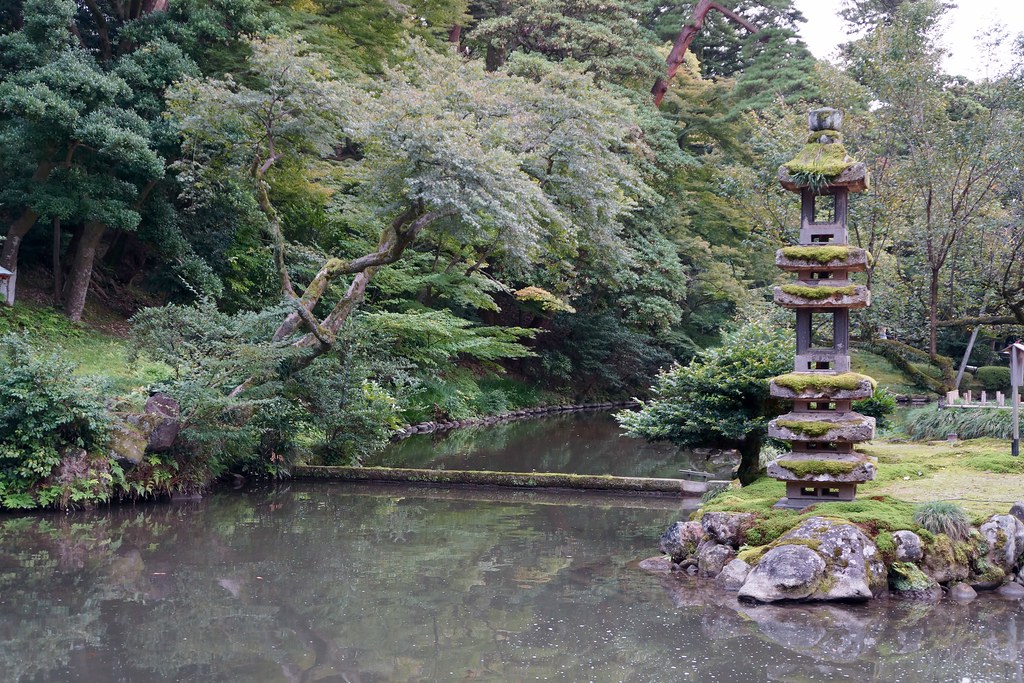
The gravel is the adult's problem at this age rather than the child's: an eight-month-old slept through the whole loop while her parents pushed the stroller over it. One family carrying a baby judged snowy paths too risky and skipped the garden altogether.

The souvenir shops can fill the time at this age: one family with a baby kept stopping into them and bought all sorts of things.