
Ueno Park
One of Japan's first public parks, with the zoo and museums inside its grounds.
piggybackjapan.com

Ueno Park
SaveOne of Japan's first public parks, with the zoo and museums inside its grounds.
On the swan boats crossing Shinobazu Pond, even a three-year-old can steer.
MoreWhat kind of place
An 1873 government decree made Ueno Park one of Japan's first public parks, alongside Shiba, Asakusa, Fukagawa and Asukayama.
The land had belonged to Kan'ei-ji temple, and after the Meiji Restoration it passed to the state.
In 1924 the Imperial Household handed it to the City of Tokyo — which is why the Japanese name carries the word onshi, an imperial gift.
The park covers about 133 acres of plateau and pond, with roughly 1,200 cherry trees inside the gates.
With kidsThe part that matters
If you cannot pin down where to spend the day in Tokyo, come here and choose once you are inside: the zoo and a row of museums all stand in these grounds.
When the walking catches up with everyone, the boats on Shinobazu Pond buy you half an hour off your feet: a swan boat takes two adults and one child, ¥1,000 for 30 minutes, and a three-year-old can steer it.
The loop around the pond is flat, with almost no steps and nothing at the entrances more than an inch high, so the stroller keeps rolling.
The park's own with-kids route strings the big places together — the science museum, then the zoo, then down to the pond — so you do not have to work out the order yourself.
One catch: the boathouse stops taking riders an hour before it closes, so the boats work better as a first stop than a last one.
Sources and evidence (4)
- A mom here weekly with toddlers: the playground has rubber-chip ground, quiet on weekdays and quietest on Mondays.source
- Two small playgrounds, by the pond and by the zoo gate, for 3- to 5-year-olds. Worth a stop, not a destination.source
- By the fountain plaza. Strollers roll to the table, belted chairs, changing space. Easy on a weekday evening in April.source
- In winter with two 3-year-olds: a 3-year-old can steer, there is room inside, and you cannot choose your boat's color.source
By age0-1 / 2-3 / 4-6
- Ages 0-1The path around Shinobazu Pond is flat with almost no steps, so you can make the full loop with the stroller. From early July to late August lotus flowers open across the whole pond, and since they open at dawn and close toward midday, a morning walk lands right on their best hour.There is no stroller to borrow, so bring your own. The park has 10 diaper changing tables and 9 wheelchair-accessible restrooms, shown on the official map as "restrooms for everyone," but which restroom has what is not published. A nursing room is listed among the facilities too, though the number and locations are not published, so checking the official barrier-free map before you go is the sure way. The Ueno-no-yama side is on a slope, and the same map color-codes routes by path width and gradient so you can pick a flat one.
- Ages 2-3The swan boats and cycle boats on Shinobazu Pond take two adults and one child, both 1,000 yen per 30 minutes. Just inside the Shinobazu entrance, Hakamagoshi Plaza has a fountain shaped like a frog, belly button and all.The boathouse closes earlier than the park: April to September 10:00-17:50 with the desk closing at 16:50, October and March 9:30-17:20 with the desk at 16:20, and November to February 9:30-16:50 with the desk at 15:50. It is closed on Wednesdays from December to February. On a boat day, plan backwards from the desk's cutoff and you will not miss it. The park is free to enter, but facilities such as the zoo charge separately.
- Ages 4-6The park's official route maps include a "with children" route: out of the Koen-guchi exit into the park, right at the corner of the Museum of Western Art to the Science Museum, back the same way and straight on to the zoo (admission charged separately), over to the West Garden, and through Benten Gate to Shinobazu Pond — an order a child can walk on their own feet.The park covers 538,506.96 square meters and the Ueno-no-yama side is on a slope. Cherry blossom season draws close to 3.3 million visitors in total, so agreeing on a meeting point first is worth it: Hakamagoshi Plaza, with the belly-buttoned frog fountain, is one the park itself suggests for meeting up, and it is lit up at night. The park is open 5:00 to 23:00 and has no closing days.
By weatherRain, heat, cold
- Rainy dayIt's outdoors: the plateau known as Ueno Hill plus Shinobazu Pond, with museums, art museums, and the zoo clustered inside the grounds. The park's own "with kids" route walks you from Koen-guchi to the science museum, then the zoo, then Shinobazu Pond.
- Hot dayNot checked yet
- Cold dayNot checked yet
How was it with your kids?
Not greatGreat
- ElevatorElevator:none
- Stroller OKStroller friendly:with conditionsconditions
- RentalStroller rental:none
- NursingNursing space:with conditionsconditions
- ChangingDiaper changing table:with conditionsconditions
- Family WCFamily restroom:with conditionsconditions
- Own foodOutside food allowed:not checked
- EnglishEnglish support:not checked
* Other not checked (6)
Steps & slope caution, Diaper disposal bin, Kids' toilet seat & step stool, Hot water for formula, Fathers welcome, Child switch (rider swap)
Green = we confirmed it. Gray = not checked yet. Gray with a line through = the place does not have it.
Worth a look before you go
Japanese · opens translatedFirst-hand
A mom here weekly with toddlers: the playground has rubber-chip ground, quiet on weekdays and quietest on Mondays.
Places to play with kids around Ueno Zoo
Japanese · opens translatedFirst-hand
Two small playgrounds, by the pond and by the zoo gate, for 3- to 5-year-olds. Worth a stop, not a destination.
A report on Ueno Park's playgrounds: fine as a stop on the way to something else
Japanese · opens translatedFirst-hand
By the fountain plaza. Strollers roll to the table, belted chairs, changing space. Easy on a weekday evening in April.
Ueno: EVERYONEs CAFE is the answer for lunch with kids in Ueno Park, where a panda plate arrives on a shinkansen
Japanese · opens translatedFirst-hand
In winter with two 3-year-olds: a 3-year-old can steer, there is room inside, and you cannot choose your boat's color.
Something new at the Shinobazu Pond boathouse: a swan-boat report where toddlers enjoy it too
Ueno Park · Links & reads ▾
Where to go next
- National Museum of Nature and ScienceScience museumStroller friendlyNursing spaceDiaper changing table10 min walkA national museum shown at full size — dinosaur skeletons, a life-size blue whale.
- Ueno ZooZooStroller friendlyNursing spaceDiaper changing table5 min walkJapan's first zoo, with about 300 species spread over two gardens.
- Tokyo National MuseumNational museumStroller friendlyNursing spaceDiaper changing table10 min walkJapan's oldest museum, six buildings on one site, showing almost only real objects.
- Ameyoko Shopping StreetMarket streetStroller friendlyDiaper changing table5 min walkA market street of some 400 shops packed into 500 meters between two stations.
- ASOBono!Indoor playgroundStroller friendlyNursing spaceDiaper changing table1.9 kmAn indoor playground at Tokyo Dome City, its ball pool filled with some 40,000 balls.
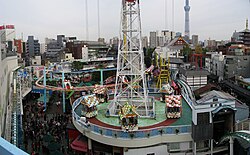
- Asakusa HanayashikiAmusement parkNursing spaceDiaper changing tableElevator2.2 kmA small amusement park, a flower garden in 1853, that calls itself Japan's oldest.


- Ueno Seiyoken HontenWestern restaurantNursing spaceDiaper changing tableElevator5 min walkWestern food in a corner of Ueno Park, from a restaurant founded in 1872.
- ASOBono!Indoor playgroundStroller friendlyNursing spaceDiaper changing table1.9 kmAn indoor playground at Tokyo Dome City, its ball pool filled with some 40,000 balls.
- Asakusa HanayashikiAmusement parkNursing spaceDiaper changing tableElevator2.2 kmA small amusement park, a flower garden in 1853, that calls itself Japan's oldest.

- Asakusa Imahan Kokusai Street Head RestaurantSukiyaki & shabu-shabuStroller friendlyElevator1.9 kmA sukiyaki and shabu-shabu house in Asakusa since 1895, serving only female black wagyu.
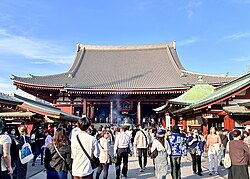
- Senso-jiTempleStroller friendlyDiaper changing tableElevator2.3 kmTokyo's oldest temple, approached through a stone-paved shopping street from the great gate.
- Ameyoko Shopping StreetMarket streetStroller friendlyDiaper changing table5 min walkA market street of some 400 shops packed into 500 meters between two stations.

- Ueno Seiyoken HontenWestern restaurantNursing spaceDiaper changing tableElevator5 min walkWestern food in a corner of Ueno Park, from a restaurant founded in 1872.
- Asakusa Imahan Kokusai Street Head RestaurantSukiyaki & shabu-shabuStroller friendlyElevator1.9 kmA sukiyaki and shabu-shabu house in Asakusa since 1895, serving only female black wagyu.
- National Museum of Nature and ScienceScience museumStroller friendlyNursing spaceDiaper changing table10 min walkA national museum shown at full size — dinosaur skeletons, a life-size blue whale.
- Ueno ZooZooStroller friendlyNursing spaceDiaper changing table5 min walkJapan's first zoo, with about 300 species spread over two gardens.
- Tokyo National MuseumNational museumStroller friendlyNursing spaceDiaper changing table10 min walkJapan's oldest museum, six buildings on one site, showing almost only real objects.
- Senso-jiTempleStroller friendlyDiaper changing tableElevator2.3 kmTokyo's oldest temple, approached through a stone-paved shopping street from the great gate.
- ASOBono!Indoor playgroundStroller friendlyNursing spaceDiaper changing table1.9 kmAn indoor playground at Tokyo Dome City, its ball pool filled with some 40,000 balls.
- Asakusa HanayashikiAmusement parkNursing spaceDiaper changing tableElevator2.2 kmA small amusement park, a flower garden in 1853, that calls itself Japan's oldest.
Piggyback Japan guides
- One Day in Ueno with Small Children
Four places inside one park — the zoo, the science museum, the park itself and the market street. What closes on Mondays, where to change a diaper, and what the pandas situation is now.
Where it is
5-20 Uenokoen, Taito-ku, Tokyo 110-0007source
Before you go
- The park pairs the plateau known as Ueno Hill with Shinobazu Pond, a mix of greenery and waterside that Tokyo treats as its breathing space, and it gathers museums, art galleries and a zoo inside the same grounds.source
- An 1873 government decree made this one of Japan's first designated parks, alongside Shiba, Asakusa, Fukagawa and Asukayama; it opened on October 19 of that year across 538,506.96 square meters, about 133 acres. The land had been the grounds of Kan'ei-ji temple, became state property after the Meiji Restoration, and was granted to the City of Tokyo by the Imperial Household in 1924 — the onshi, or imperial gift, in its Japanese name.source
- Ueno is one of Japan's best-known places for cherry blossoms, and because the early kanzakura open long before the standard somei-yoshino, the season runs close to two months. The lotus on Shinobazu Pond takes over in late July.source
More notes (7)
- Ueno Hill has been known for its cherry trees since the Edo period, and the blossom season draws close to 3.3 million visits. Azaleas follow in late spring, then lotus spreading over Shinobazu Pond in summer, then colored leaves in fall.source
- The main plantings are ginkgo, camphor, zelkova, cherry (about 1,200 trees) and lotus.source
- The boathouse has three kinds of boats: rowboats at ¥800 per 30 minutes for up to three adults, and cycle boats and swan boats at ¥1,000 per 30 minutes for up to two adults and one child. From December through February it closes on Wednesdays.source
- Just inside the Shinobazu entrance is a plaza called Hakamagoshi, named for the waistband of a hakama, where a frog fountain complete with a belly button lights up at night and doubles as an easy place to meet.source
- The lotus, a member of the water lily family, opens its flowers early in the morning and closes them toward midday, covers much of Shinobazu Pond, and is at its best from early July to late August.source
- The park publishes three route maps: a history route, a culture route and a with-kids route.source
- The with-kids route starts at the Park Exit and heads into the grounds, turning right at the corner of the National Museum of Western Art to reach the science museum. From there it doubles back the same way and continues straight to the zoo (admission charged separately), then crosses to the west garden and out through Benten Gate to Shinobazu Pond.source
Basics
- Fee:Free to enter; some facilities inside charge. Boats on Shinobazu Pond: rowboat ¥800/30 min (up to 3 adults), cycle boat ¥1,000/30 min and swan boat ¥1,000/30 min (each up to 2 adults + 1 child)source
- Hours:Open every day, 5:00-23:00 (entry outside these hours is prohibited). The park itself has no closed days; the service center and individual facilities close over the New Year periodsource
- Note: the boathouse keeps shorter hours than the park — Apr-Sep 10:00-17:50 (last rental 16:50), Oct & Mar 9:30-17:20 (16:20), Nov-Feb 9:30-16:50 (15:50), and Aug 1 to the third Sunday of August 10:00-18:20 (17:20). Closed Wednesdays December-Februarysource
Basics in detail (6)
- The boathouse closes earlier than the park: 10 a.m. to 5:50 p.m. from April to September (last rental 4:50 p.m.), 9:30 a.m. to 5:20 p.m. in October and March (4:20 p.m.), 9:30 a.m. to 4:50 p.m. from November to February (3:50 p.m.), and 10 a.m. to 6:20 p.m. from August 1 to the third Sunday in August (5:20 p.m.). From December through February it closes on Wednesdays.source
- The park is open every day of the year from 5 a.m. to 11 p.m. and closed to entry outside those hours, with only the service center and the individual facilities taking a New Year break.source
- Entry is free, some facilities inside charge their own admission, and the boats on Shinobazu Pond run ¥800 per 30 minutes for a rowboat (up to three adults) or ¥1,000 per 30 minutes for a cycle boat or swan boat (up to two adults and one child).source
- Somei-yoshino cherries peak from late March into early April. The early varieties come well before that — kanzakura from February into March, okanzakura around mid-March — and the late double-flowered sato-zakura follow, with ichiyo in mid-April and kanzan from mid to late April.source
- The lotus on Shinobazu Pond opens early in the morning and closes again toward midday, so morning is when to see it.source
- Fall color peaks as the ginkgoes turn gold and the cherry trees take on color of their own.source
Once you've decided
evidence & sources (7)
- Public agency: Stroller friendly, Stroller rental, Nursing space
- Official: Indoor / outdoor
- Public agency: Stroller friendly
Japan's first public park spreads over a wooded plateau and a pond, with museums and a zoo inside its grounds. The loop around the water stays level almost the whole way, while the hill side climbs. Cherry blossom runs for about two months here, from the early varieties to the late double-flowered ones. Swan boats cross the pond, and a frog fountain marks the plaza at the Shinobazu entrance. The park publishes its own walking route built around children.
| Stroller friendly | Yes | Mostly level. The Tokyo accessibility guide states the loop around Shinobazu Pond can be walked all the way round on flat paths with almost no steps, and entrance steps are under 2cm. The hill side of the park does have gradients, but the guide says relatively flat routes can be chosen. The park's own barrier-free map color-codes its routes by width (180cm and over / 120-180cm) and gradient (under 4% / 4-8% / 8% and over) | Web-checked | checked Aug ’26 | sangyo-rodo1.metro.tokyo.lg.jpsangyo-rodo1.metro.tokyo.lg.jpdaredemo-tokyo.metro.tokyo.lg.jpkensetsu.metro.tokyo.lg.jp |
|---|---|---|---|---|---|
| Stroller rental | No | No stroller rental listed for the park (Tokyo's accessibility facility database). Wheelchairs are lent — 4 of them | Web-checked | checked Aug ’26 | daredemo-tokyo.metro.tokyo.lg.jp |
| Nursing space | Yes | A nursing room is listed among the park's facilities in Tokyo's accessibility facility database (surveyed 5 Nov 2025). The number of rooms and their locations are not published. The park's official barrier-free map has legend symbols for nursing rooms, baby beds, baby chairs and 'Akachan Flat' baby rest points | Web-checked | checked Aug ’26 | daredemo-tokyo.metro.tokyo.lg.jpdaredemo-tokyo.metro.tokyo.lg.jpkensetsu.metro.tokyo.lg.jp |
| Diaper changing table | Yes (10) | 10 changing tables across the park (Tokyo's accessibility facility database, surveyed 5 Nov 2025). Which restrooms have them is not published | Web-checked | checked Aug ’26 | daredemo-tokyo.metro.tokyo.lg.jp |
| Family restroom | Yes (9) | 9 wheelchair-accessible restrooms in the park (Tokyo's accessibility facility database). The official barrier-free map marks them as 'anyone' restrooms. No ostomate fittings or universal changing benches are recorded | Web-checked | checked Aug ’26 | daredemo-tokyo.metro.tokyo.lg.jpdaredemo-tokyo.metro.tokyo.lg.jpkensetsu.metro.tokyo.lg.jp |
| Steps & slope caution | Not checked yet | ||||
| Elevator | No | The park itself has no elevator (Tokyo's accessibility facility database). Nearby, the official barrier-free map notes an elevator at Yushima Station exit 3, and the Tokyo accessibility guide lists the Ueno-no-Mori Sakura Terrace elevator as usable 10:00-23:00 | Web-checked | checked Aug ’26 | daredemo-tokyo.metro.tokyo.lg.jpdaredemo-tokyo.metro.tokyo.lg.jpkensetsu.metro.tokyo.lg.jp |
| Indoor / outdoor | Outdoor | Outdoors — a plateau known as Ueno Hill plus Shinobazu Pond. The museums, galleries and the zoo clustered inside the park are the indoor options | Web-checked | checked Aug ’26 | kensetsu.metro.tokyo.lg.jp |
| Diaper disposal bin | Not checked yet | ||||
| Kids' toilet seat & step stool | Not checked yet | ||||
| Outside food allowed | Not checked yet | ||||
| English support | Not checked yet | ||||
| Hot water for formula | Not checked yet | ||||
| Fathers welcome | Not checked yet | ||||
| Child switch (rider swap) | Not checked yet |