
Kyu-Iwasaki-tei Gardens
A former Tokyo family estate whose 1896 Western-style house was designed by Josiah Conder.
piggybackjapan.com
Kyu-Iwasaki-tei Gardens
SaveContains ads | Our order isn't influenced by ads ▶ How we make money ▶ How we choose places
A former Tokyo family estate whose 1896 Western-style house was designed by Josiah Conder.
Visitors tour in their socks, going from the Western house to the Japanese-style hall.
MoreWhat kind of place
Built in 1896 as the main residence of Iwasaki Hisaya, third president of Mitsubishi, the Western house was designed by the British architect Josiah Conder.
Twenty buildings once stood on the estate, and three remain: the Western house, the billiard room and the Japanese-style hall.
Today it is a Tokyo metropolitan garden, open since 2001, and the Western house and billiard room have been Important Cultural Properties since 1961.
With kidsThe part that matters
The Japanese-style hall, the last stop on the one-way route, has tatami rooms where, in 2019, a 10-month-old crawled. Children inside are now asked to be held by the hand or carried.
The Western house displays a cut-out piece of its gilded-leather-paper wallpaper that you may touch. Its second-floor veranda also delighted a 1-year-old.
It is a calm place to see old rooms at your own pace, even with a baby. On weekdays in 2022 and February 2025 it was nearly empty (Golden Week and free days were crowded).
By age0-1 / 2-3 / 4-6
- Ages 0-1Babies can enjoy this at a gentle pace: an 11-month-old stared at the ceiling lamps, in 2019 a 10-month-old crawled on tatami, and in 2020 a 1-year-old who hated being carried toddled around while his mother followed anxiously; today the park asks that children inside be held by the hand or carried. Carrying a baby, a bag and a shoe bag is tough, a mother of a 10-month-old noted, so pack light.
- Ages 2-3Not checked yet
- Ages 4-6Not checked yet
By weatherRain, heat, cold
- Rainy dayIn rain, the garden is the part you lose: one visitor came out of the house to a downpour and could not photograph the garden. Still, another visitor took a break in the newly rebuilt Service Center on a rainy day, so check the forecast before you go.
- Hot dayMidsummer is the hard season, because the Western house, Japanese hall and billiard room have no air conditioning. The ticket building's third-floor rest area is air-conditioned, and a mother with a 10-month-old, who managed in late September, suggests avoiding midsummer.
- Cold dayWith no heating in the buildings, winter is cold, so the park asks visitors to wear clothes they can adjust. One winter visitor found small hot carpets here and there.
How was it with your kids?
Not greatGreat
- ElevatorElevator:none
- Stroller OKStroller friendly:with conditionsconditions
- RentalStroller rental:not checked
- NursingNursing space:with conditionsconditions
- ChangingDiaper changing table:with conditionsconditions
- Family WCFamily restroom:with conditionsconditions
- Own foodOutside food allowed:with conditionsconditions
- EnglishEnglish support:with conditionsconditions
Not yet checked: 7
Lost-child support, Diaper disposal bin, Kids' toilet seat & step stool, Official family-friendly certification, High chair, Kids' menu, Best-fit ages (guide)
Green = we confirmed it. Gray = not checked yet. Gray with a line through = the place does not have it.
Kyu-Iwasaki-tei Gardens · Links & reads ▾
Where to go next
- Akihabara Electric Town1.2 kmAkihabara Electric Town is a shopping district of about 500 shops beside JR Akihabara Station.
- ASOBono!Indoor playgroundStroller friendlyNursing spaceDiaper changing table1.5 kmAn indoor playground at Tokyo Dome City, its ball pool filled with some 40,000 balls.
- Ueno ParkCity parkStroller friendlyNursing spaceDiaper changing table5 min walkOne of Japan's first public parks, with the zoo and museums inside its grounds.
- National Museum of Nature and ScienceScience museumStroller friendlyNursing spaceDiaper changing table15 min walkA national museum shown at full size — dinosaur skeletons, a life-size blue whale.
- Tokyo National MuseumNational museumStroller friendlyNursing spaceDiaper changing table15 min walkJapan's oldest museum, six buildings on one site, showing almost only real objects.
- Ueno ZooZooStroller friendlyNursing spaceDiaper changing table10 min walkJapan's first zoo, with about 300 species spread over two gardens.


- Ueno Seiyoken HontenWestern restaurantNursing spaceDiaper changing tableElevator10 min walkWestern food in a corner of Ueno Park, from a restaurant founded in 1872.
- National Museum of Nature and ScienceScience museumStroller friendlyNursing spaceDiaper changing table15 min walkA national museum shown at full size — dinosaur skeletons, a life-size blue whale.
- Tokyo National MuseumNational museumStroller friendlyNursing spaceDiaper changing table15 min walkJapan's oldest museum, six buildings on one site, showing almost only real objects.

- Ameyoko Shopping StreetMarket streetStroller friendlyDiaper changing table10 min walkA market street of some 400 shops packed into 500 meters between two stations.
- Asakusa Imahan Kokusai Street Head RestaurantSukiyaki & shabu-shabuElevator2.3 kmA sukiyaki and shabu-shabu house in Asakusa since 1895, serving only female black wagyu.
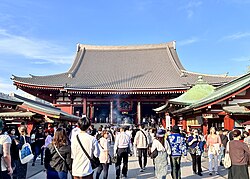
- Senso-jiTempleStroller friendlyDiaper changing tableElevator2.7 kmTokyo's oldest temple, approached through a stone-paved shopping street from the great gate.
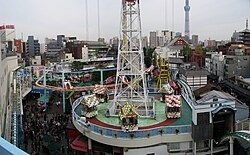
- Asakusa HanayashikiAmusement parkNursing spaceDiaper changing tableElevator2.5 kmA small amusement park, a flower garden in 1853, that calls itself Japan's oldest.


- Ueno Seiyoken HontenWestern restaurantNursing spaceDiaper changing tableElevator10 min walkWestern food in a corner of Ueno Park, from a restaurant founded in 1872.
- Asakusa Imahan Kokusai Street Head RestaurantSukiyaki & shabu-shabuElevator2.3 kmA sukiyaki and shabu-shabu house in Asakusa since 1895, serving only female black wagyu.
- National Museum of Nature and ScienceScience museumStroller friendlyNursing spaceDiaper changing table15 min walkA national museum shown at full size — dinosaur skeletons, a life-size blue whale.
- Tokyo National MuseumNational museumStroller friendlyNursing spaceDiaper changing table15 min walkJapan's oldest museum, six buildings on one site, showing almost only real objects.
- Ueno ZooZooStroller friendlyNursing spaceDiaper changing table10 min walkJapan's first zoo, with about 300 species spread over two gardens.
- Senso-jiTempleStroller friendlyDiaper changing tableElevator2.7 kmTokyo's oldest temple, approached through a stone-paved shopping street from the great gate.
- ASOBono!Indoor playgroundStroller friendlyNursing spaceDiaper changing table1.5 kmAn indoor playground at Tokyo Dome City, its ball pool filled with some 40,000 balls.
- Ueno ParkCity parkStroller friendlyNursing spaceDiaper changing table5 min walkOne of Japan's first public parks, with the zoo and museums inside its grounds.
- Asakusa HanayashikiAmusement parkNursing spaceDiaper changing tableElevator2.5 kmA small amusement park, a flower garden in 1853, that calls itself Japan's oldest.
Where it is
The address is 1-3-45 Ikenohata, Taito City, Tokyo.source
Before you go
- Strollers and other wheeled items cannot enter the Western house or the Japanese-style hall, so bring a baby carrier. Strollers can be used in the garden, though the grounds have many steps, and the outdoor stroller area is unattended, so one visitor advised leaving no bags in it.
- Pack socks for the whole family: shoes come off at the door, the park asks for socks inside to protect its cultural properties, and slippers are not allowed. A 2025 visitor was handed a bag for carrying shoes by staff at the entrance and saw spare socks set out for those without.
- Children up to elementary-school age must be accompanied by a guardian of junior-high age or older. Inside, hold your child's hand or carry them, because running is banned, as is sitting or lying down in rooms, hallways and on stairs. Balls, bubbles, kites and kick scooters are banned on the grounds too.
- There is no restaurant, so bring snacks: outside food is allowed except alcohol. Eat your own food only in the third-floor rest area of the ticket building at the gate or on garden benches, never inside the Western house or Japanese hall. There are no trash cans, so take all trash home, and stay off the lawn and skip picnic sheets. The Japanese-style hall's tea room serves a matcha set with a seasonal sweet.
- On weekends and holidays, photography inside the buildings is banned entirely. On weekdays you may photograph the rooms but not people, selfies included.
- Weekends and holidays are busiest from about 14:00 to 16:00, and the buildings cap their numbers, so you may wait to get in. A weekday afternoon in 2022 was very quiet. Last entry is 16:30, and once you leave you cannot re-enter. Children up to elementary-school age enter free and, with a guardian, can go straight to the garden entrance without buying an online ticket.
- The nearest station is Yushima (Tokyo Metro Chiyoda Line): Exit 1 is a 3-minute walk, and stroller users are directed to the Exit 3 elevator. From the gate, a gravel path rises just under 100 m, and in 2020 one visitor's stroller wheels struggled in it. A 2026 post describes taking the ticket building's elevator up to a third-floor rest area that opens onto the garden. There is no general parking.
Sources and evidence (46)
- A Tokyo Metropolitan Government park map shows a nursing symbol only at the Service Center by the main gate (read from the symbol; the room's name and floor are not shown).source
- The same map shows diaper-changing symbols at three places: the restroom beside the carriage drive north of the Western house, the one between the Western house and the Japanese hall (above the shop), and the Service Center.source
- Wheelchair-accessible restrooms number four: one outdoors, and three indoors (the Japanese hall's connecting corridor, and the first and third floors of the ticket building).source
- Strollers can be used in the garden but not in the Western house or Japanese hall, where you leave them at the stroller area; the grounds have many steps.source
- Strollers cannot go inside the Western house or Japanese hall, so babies must be carried; there is a stroller area outdoors.source
- Because strollers cannot go inside, a baby carrier is a must; strollers can go as far as the space where you can view the exterior of the building.source
- It combines outdoors (the lawn garden) and indoors (the Western house and Japanese hall); shoes come off inside and the buildings have no air conditioning or heating.source
- Officially, stroller and wheelchair users are asked to take the elevator at Exit 3 of Yushima Station.source
- There is no elevator inside the Western house, Japanese hall or billiard room, all Meiji-era buildings; the official FAQ does not say whether the ticket building has one.source
- A 2026 post describes buying a ticket at the ticket building, taking the elevator to the third-floor rest area and stepping out into the garden.source
- An English garden map (PDF) can be downloaded from the official site; whether signs or staff on site use English is not known.source
- Outside food is allowed, but not alcohol, and eating your own food inside the Western house or Japanese hall is not; eat in the ticket building's third-floor rest area or on garden benches, and stay off the lawn with no picnic sheets.source
- Admission is 400 yen for adults and 200 yen for ages 65 and over; groups of 20 or more pay 320 yen and 160 yen.source
- Admission is free for elementary-school children and younger, and for junior-high students who live or study in Tokyo.source
- The garden is open 9:00 to 17:00 with last entry at 16:30, and hours can be extended during events.source
- No reservation is needed to enter.source
- Yushima Station Exit 1 is a 3-minute walk, and strollers and wheelchairs are directed to the elevator at Exit 3.source
- The only parking space is one reserved for wheelchair users and visitors with disabilities.source
- The address is 1-3-45 Ikenohata, Taito City, Tokyo.source
- The buildings have an occupancy limit, so you may wait to get in when it is busy.source
- Children up to elementary-school age (with a guardian) do not need to buy an online ticket and can go straight to the garden entrance.source
- Once you leave you cannot re-enter, with either an online or a window ticket.source
- Shoes come off before entering the Western house and the Japanese hall.source
- To protect the cultural properties, the park asks visitors to wear socks inside.source
- Slippers and indoor shoes are not allowed inside, for safety and to protect the tatami.source
- Children up to elementary-school age need a guardian of junior-high age or older.source
- Inside, you are asked to hold your child's hand or carry them and not take your eyes off them.source
- Running in passages, and sitting or lying down in rooms, passages and on stairs, is prohibited.source
- Strollers, carry-on bags and other wheeled items cannot be brought into the Western house or Japanese hall.source
- The English rules also ban riding kick bikes and kick scooters on the grounds.source
- Bubbles, kites, balls and jump ropes, and other play or sports equipment, cannot be used.source
- The grounds have many steps.source
- There is no restaurant in the garden.source
- The tea room in the Japanese hall serves a matcha set with a seasonal sweet.source
- If you eat, use the ticket building's third-floor rest area or the benches placed in the garden.source
- The garden asks visitors not to step on the lawn or use picnic sheets.source
- There are no trash cans in the garden, so trash goes home with you; diaper bins are not mentioned.source
- Photography inside the buildings is not allowed on Saturdays, Sundays and holidays.source
- Inside the buildings only the rooms may be photographed, never people, selfies included.source
- From the main gate, a gravel-paved uphill path of just under 100 m leads toward the garden.source
- On weekends and holidays, crowds peak from about 14:00 to 16:00.source
- The stroller area is unattended, so one visitor advised not leaving bags there.source
- In 2020, one visitor's stroller wheels struggled in the gravel on the uphill path inside the gate.source
- A 2025 visitor was handed a bag for carrying shoes by staff when entering.source
- A 2025 visitor saw socks set out at the entrance for people without any.source
- A 2022 visitor on a weekday afternoon found it very empty.source
Basics
- Fee: Admission is 400 yen for adults and 200 yen for ages 65 and over; groups of 20 or more pay 320 yen and 160 yen.source
- Hours: The garden is open 9:00 to 17:00 with last entry at 16:30, and hours can be extended during events.source
- Booking: No reservation is needed to enter.source
Once you've decided
evidence & sources (8)
- Official: Family restroom, Indoor / outdoor, Elevator
- Public agency: Nursing space, Diaper changing table
- Official: English support
- Official: Stroller friendly
| Nursing space | Yes | A Tokyo Metropolitan Government park map shows a nursing symbol only at the Service Center by the main gate (read from the symbol; the room's name and floor are not shown). | Web-checked | checked Oct ’26 | kensetsu.metro.tokyo.lg.jp |
|---|---|---|---|---|---|
| Diaper changing table | Yes | The same map shows diaper-changing symbols at three places: the restroom beside the carriage drive north of the Western house, the one between the Western house and the Japanese hall (above the shop), and the Service Center. | Web-checked | checked Oct ’26 | kensetsu.metro.tokyo.lg.jp |
| Family restroom | Yes | Wheelchair-accessible restrooms number four: one outdoors, and three indoors (the Japanese hall's connecting corridor, and the first and third floors of the ticket building). | Web-checked | checked Oct ’26 | tokyo-park.or.jp |
| Stroller friendly | Conditional | Yes: Strollers can be used in the garden but not in the Western house or Japanese hall, where you leave them at the stroller area; the grounds have many steps. / No: Strollers cannot go inside the Western house or Japanese hall, so babies must be carried; there is a stroller area outdoors. | Web-checked | checked Sep ’25 | tokyo-park.or.jp |
| Lost-child supportExtra info — guide only | Not checked yet | ||||
| Indoor / outdoor | Indoor & outdoor | It combines outdoors (the lawn garden) and indoors (the Western house and Japanese hall); shoes come off inside and the buildings have no air conditioning or heating. | Web-checked | checked Oct ’26 | tokyo-park.or.jp |
| Diaper disposal bin | Not checked yet | ||||
| Kids' toilet seat & step stool | Not checked yet | ||||
| Elevator | No | There is no elevator inside the Western house, Japanese hall or billiard room, all Meiji-era buildings; the official FAQ does not say whether the ticket building has one. | Web-checked | checked Oct ’26 | tokyo-park.or.jp |
| English support | English menu & signs | An English garden map (PDF) can be downloaded from the official site; whether signs or staff on site use English is not known. | Web-checked | checked Oct ’26 | tokyo-park.or.jp |
| Outside food allowed | Yes | Outside food is allowed, but not alcohol, and eating your own food inside the Western house or Japanese hall is not; eat in the ticket building's third-floor rest area or on garden benches, and stay off the lawn with no picnic sheets. | Web-checked | checked Oct ’26 | tokyo-park.or.jp |
| Official family-friendly certificationExtra info — guide only | Not checked yet | ||||
| High chair | Not checked yet | ||||
| Kids' menu | Not checked yet | ||||
| Best-fit ages (guide)Extra info — guide only | Not checked yet |