
Kids Plaza Osaka
A children's museum built to be touched, the first of its kind in Japan.
piggybackjapan.com

Kids Plaza Osaka
SaveA children's museum built to be touched, the first of its kind in Japan.
Children race the rope bridge and tube slide of Kids' Town, a climbing city two floors high, until they sweat.
MoreWhat kind of place
Kids Plaza Osaka opened in July 1997 as what it calls the first museum in Japan built specifically for children, and it has drawn more than 400,000 visitors a year ever since.
The exhibits are made to be handled rather than watched, and about 250 volunteers, called interpreters, work the floors, introducing each exhibit and drawing children into it.
Each floor has its own job: you start on the first floor with Ball Circus, where balls roll along rails and ride a Ferris wheel, then work up to the third for making things, the fourth for playing, and the fifth for trying things out.
Sources and evidence (41)
- Strollers are lent for free at the information desk on the first floor, for use inside the building only.source
- There are 20 strollers available to borrow.source
- Under the manufacturer's rules, the loaner strollers are only for children up to age 2.source
- The museum's FAQ gives the weight limit for the loaner strollers as about 15 kg, roughly 33 pounds.source
- Stroller parking is next to the play area (Kids Hiroba) on the fifth floor and next to the Peekaboo area on the fourth floor.source
- Four wheelchairs can be borrowed for free: two adult-size and two child-size.source
- Near the nursing room there is a hot water dispenser for formula and a sink.source
- For children's safety, the building has no microwave and no hot water pot for visitors to use.source
- There is no restaurant or cafe inside the building.source
- Vending machines with drinks and snacks are on the fifth and fourth floors, and an ice cream machine stands at the third-floor exit.source
- The coin lockers cost nothing: you put in a 500-yen coin and get it back when you take your things out.source
- Coin lockers are on the fifth floor next to the vending machines and next to Waiwai Studio, on the fourth floor next to Peekaboo, and on the third floor next to the stairs.source
- Suitcases can be left on a free locking bar on the fifth floor.source
- Everything is indoors, so the visit works whatever the weather or temperature does.source
- The exhibits and fixtures are built with care to keep children from getting hurt.source
- Children cannot come in on their own; a parent or guardian has to be with them.source
- You can re-enter through the third-floor exit on the same day by showing your ticket.source
- Adults 16 and over can visit without children by signing in on the first floor and wearing the visitor badge on a neck strap.source
- If someone feels unwell, tell the office on the fourth floor and you will be taken to a first-aid room, where ice water and disinfectant are on hand.source
- An AED, the machine used to restart a heart, is next to the multipurpose room on the fourth floor.source
- No doctor or nurse is on site, though staff will call an ambulance if you ask.source
- Lost and found items are held at the office on the fourth floor.source
- The building is nonsmoking, with a smoking area just outside.source
- Osaka Free Wi-Fi reaches the area near the fourth-floor vending machines and the area near the Jabu-jabu Pump on the fifth floor.source
- After 2:30 p.m. on weekdays, the museum is usually calmer.source
- It opened in July 1997 as the first full-scale museum in Japan made for children.source
- The museum calls itself the first full-scale museum for children in Japan.source
- It has drawn more than 400,000 visitors every year since it opened.source
- The exhibits are hands-on, meaning children take part by touching them and using their bodies.source
- Staff called interpreters introduce and explain the exhibits and programs to draw out children's interest.source
- The museum is run together with about 250 volunteer interpreters.source
- The fifth floor is the try-it floor, where corners let children learn science and culture through play.source
- The fourth floor is the play floor, and the museum recommends it for babies and toddlers.source
- The fourth floor is built around Kids' Town, with play that zooms in on everyday life.source
- The third floor is the make-it floor, lined with programs about the pleasure of building things.source
- The first floor is the what-is-this floor, where the visit starts with a noisy welcome from the Ball Circus.source
- Ball Circus is an exhibit where balls roll along rails and ride a Ferris wheel, and the fun is hunting for how each part works.source
- After a full day of playing, you head out through the exit on the third floor.source
- The rest area on the fourth floor is designed to feel like a forest, with wooden tables, chairs, and benches.source
- The museum runs workshops such as crafts and experiments.source
- There is a museum shop, Neverland, on the third floor.source
With kidsThe part that matters
If rain or wind cancels the outdoor plan, you can still spend the whole day here, because everything is indoors. Children climb two floors of Kids' Town, crossing a rope bridge and riding a tube slide back down.
There is no restaurant inside, so bring lunch with you and eat at the round tables on the fourth floor instead of heading back out to find food.
In the school field-trip seasons (late April to late June, late September to early December, and February to mid-March), groups fill the building on weekdays from opening until 2:30 p.m., so arriving after that usually gets you calmer floors.
Sources and evidence (5)
- Arrived at opening with a six-year-old: ten groups already queued at 9:30, lockers take a returnable 500-yen coin.source
- Children five years apart: on 4F the older and younger play separately. Quiet in the morning, packed after noon.source
- Where to eat your bento: the multipurpose room on 4F. Re-entry is allowed, and you leave by the 3F exit to do it.source
- A regular with an 18-month-old: on weekdays 9:30 is near empty, groups arrive at 10, Obon queue four times normal.source
- A public holiday with a 2- and a 6-year-old: the next-door parking lot is ¥200 per 30 min, capped at ¥1,700 a day.source
By age0-1 / 2-3 / 4-6
- Ages 0-1The 4th floor, the "Asobou (Play) Floor," is the one the museum itself lists as recommended for babies and toddlers. On the 1st floor, the Ball Circus is an exhibit you simply watch, with balls rolling along rails and riding a Ferris wheel, so a baby in arms can follow it with their eyes. Everything is indoors, so heat, cold, and rain do not change the plan.Admission is free for ages 0 to 2. Strollers are lent free at the 1st-floor information desk (20 of them, for use inside only), and the maker's rules limit them to children up to age 2. The nursing room is inside Peekaboo on the 4th floor, with a hot-water dispenser for formula and a sink nearby. Diaper changes happen on the baby sheets in the multipurpose restrooms on every floor, and vending machines on the 4th and 5th floors sell diapers. For the children's safety there is no microwave and no hot-water pot in the building, so bring baby food that can be eaten unheated.
- Ages 2-3Kids' Town, the climbing city that runs through the 4th and 5th floors, has a rope bridge and a tube slide to run around in. The 4th floor, the "Asobou (Play) Floor," is built around Kids' Town and zooms in on everyday life for children to act out. The exhibits are hands-on, made to be touched and climbed, and staff called interpreters introduce them and draw children in.Ages 3 to 5 pay 500 yen (0 to 2 are free). The tube slider runs 10:00-14:00 on weekdays, so on a weekday get in before 14:00 and let them slide first. The loaner strollers only go to children up to age 2 (about 15 kg), so bring your own if your child is 3. Wash-off showers for accidents are in the 5th-floor restroom (culture corner) and the 4th-floor restroom (Peekaboo). Children cannot enter on their own; a guardian must come with them.
- Ages 4-6The 3rd floor, the "Tsukurou (Make) Floor," is lined with programs about the joy of making things, and workshops in crafts and experiments run here too. The 5th floor, the "Yattemiru (Try) Floor," gathers corners where science and culture are learned through play. Around 250 interpreters, volunteers included, will explain an exhibit if your child asks.Ages 3 to 5 pay 500 yen and ages 6 to 15 pay 800 yen; a 6-year-old still pays the 500-yen preschool rate until the end of March of the year they graduate from kindergarten. Workshop fees and the museum shop take cash only, so carry some. On weekdays in school excursion season (late April to late June, late September to early December, February to mid-March) it is crowded from 9:30 to 14:30, and after 14:30 on weekdays it is comparatively relaxed.
By weatherRain, heat, cold
- Rainy dayThe museum states that it is an indoor facility you can enjoy whatever the weather, including changes in temperature. Floors 1 through 5 are all inside, and it is right by Exit 2 of Ogimachi Station on the Osaka Metro Sakaisuji Line.
- Hot dayNot checked yet
- Cold dayNot checked yet
How was it with your kids?
Not greatGreat
- ElevatorElevator:with conditionsconditions
- Stroller OKStroller friendly:with conditionsconditions
- RentalStroller rental:with conditionsconditions
- NursingNursing space:with conditionsconditions
- ChangingDiaper changing table:with conditionsconditions
- Family WCFamily restroom:with conditionsconditions
- Own foodOutside food allowed:with conditionsconditions
- EnglishEnglish support:with conditionsconditions
* Other not checked (7)
Kids' toilet seat & step stool, Diaper disposal bin, Child switch (rider swap), Steps & slope caution, Official family-friendly certification, Quietness (guide), Lost-child support
Green = we confirmed it. Gray = not checked yet. Gray with a line through = the place does not have it.
Worth a look before you go
Japanese · opens translatedFirst-hand
Arrived at opening with a six-year-old: ten groups already queued at 9:30, lockers take a returnable 500-yen coin.
Best from age 5 to 8: a family report from Kids Plaza Osaka with a 6-year-old [discounts, crowds, what to bring]
Japanese · opens translatedFirst-hand
Children five years apart: on 4F the older and younger play separately. Quiet in the morning, packed after noon.
We took a second-grader and a three-year-old to Kids Plaza Osaka
Japanese · opens translatedFirst-hand
Where to eat your bento: the multipurpose room on 4F. Re-entry is allowed, and you leave by the 3F exit to do it.
We went to Kids Plaza Osaka: how do you get there, and can you bring a bento?
Japanese · opens translatedFirst-hand
A regular with an 18-month-old: on weekdays 9:30 is near empty, groups arrive at 10, Obon queue four times normal.
Ideal for a scorching summer day: Kids Plaza Osaka with a one-year-old
Japanese · opens translatedFirst-hand
A public holiday with a 2- and a 6-year-old: the next-door parking lot is ¥200 per 30 min, capped at ¥1,700 a day.
Are there discounts at Kids Plaza Osaka? Parking and lunch, reported from an actual visit
Kids Plaza Osaka · Links & reads ▾
Where to go next
- Umeda Sky Building (Kuchu Teien Observatory)Observation deckStroller friendlyNursing spaceElevator1.8 kmTwo Osaka skyscrapers joined at the top by an open rooftop deck, 173 meters up.
- Osaka CastleCastleStroller friendlyNursing spaceDiaper changing table2.4 kmA castle keep rebuilt in 1931 by public donation, holding an eight-floor museum inside.
- Jiyuken Namba HontenWestern-style diner4.3 kmOsaka's first Western-style restaurant, opened in Namba in 1910.
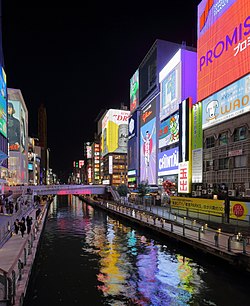
- DotonboriEntertainment districtStroller friendly4.0 kmAn entertainment street along a canal finished in 1615 and named for its digger.
- Kuromon MarketFood market streetDiaper changing table4.4 kmPufferfish and fruit out front, shop after shop, down one straight street.
- Hozenji Yokocho4.1 kmHozenji Yokocho is two stone-paved lanes lined with about 60 restaurants, beside a small temple.




- SHINSAIBASHI-SUJI SHOPPING STREET3.4 kmA covered shopping arcade 580 meters long, running north from Dotonbori to Nagahori-dori.
- Osaka Aquarium KaiyukanAquariumStroller friendlyNursing spaceDiaper changing table9.2 kmAn aquarium arranged by region around the Pacific Rim, holding some 620 species.
- Universal Studios JapanMovie theme parkStroller friendlyNursing spaceDiaper changing table8.2 kmA film theme park on Osaka Bay, its ten areas including Mario and Harry Potter worlds.


- Umeda Sky Building (Kuchu Teien Observatory)Observation deckStroller friendlyNursing spaceElevator1.8 kmTwo Osaka skyscrapers joined at the top by an open rooftop deck, 173 meters up.
- Osaka CastleCastleStroller friendlyNursing spaceDiaper changing table2.4 kmA castle keep rebuilt in 1931 by public donation, holding an eight-floor museum inside.
- DotonboriEntertainment districtStroller friendly4.0 kmAn entertainment street along a canal finished in 1615 and named for its digger.
- Hozenji Yokocho4.1 kmHozenji Yokocho is two stone-paved lanes lined with about 60 restaurants, beside a small temple.
- Osaka Aquarium KaiyukanAquariumStroller friendlyNursing spaceDiaper changing table9.2 kmAn aquarium arranged by region around the Pacific Rim, holding some 620 species.
Where it is
2-1-7 Ogimachi, Kita-ku, Osaka-shi, Osaka 530-0025source
Before you go
- Advance tickets are sold at Lawson, FamilyMart, 7-Eleven, and Ministop convenience stores.source
- Individual visitors do not need to book ahead.source
- For safety, children may not leave on their own, and adults may not go outside and leave their children in the building.source
- On weekdays in the school field-trip seasons (late April to late June, late September to early December, and February to mid-March), it gets crowded from 9:30 a.m. to 2:30 p.m.source
- The official website posts a crowd forecast for each day, on a four-step scale from quiet to very crowded.source
Basics
- Fee:Admission is 1,500 yen for adults (16 and over), 800 yen for children aged 6-15, 500 yen for ages 3-5, and free for ages 0-2. A six-year-old still pays the toddler rate until the end of March of the year they leave kindergarten, and a 15-year-old already at high school pays the adult rate. With a disability certificate it is 700 yen for an adult, 400 for a child, 200 for a toddler, and 700 for a carer; visitors aged 65 and over pay 700 yen with proof of age. There are one-year and six-month passports (8,700 yen a year for an adult), a Family Ticket of four adult admissions for 5,000 yen for people accompanying a passport-holding child or a child aged 0-2, and a cheaper Rainbow ticket sold from 2pm on weekdays. Advance tickets are on sale at Lawson, FamilyMart, 7-Eleven and Ministop. Cards are accepted; e-money only until 15:00, and the shop and event fees are cash only.source2
- Hours:Open 9:30-17:00, last admission 16:15; tickets stop selling 45 minutes before closing. Closed on the second and third Monday of the month (the following day when that Monday is a public holiday), on the fourth Monday in August, and from 28 December to 2 January. Extra closing days happen — the official event calendar marks them. Opening hours can change in a disaster or similar situation.source2
- Booking:Individual visitors do not need to book. School groups and any group of 20 or more must book in advance. Advance tickets are also sold at convenience stores.source2
Basics in detail (30)
- The museum is open from 9:30 a.m. to 5:00 p.m.source
- Last admission is 4:15 p.m.source
- Tickets are sold until 45 minutes before closing.source
- The museum closes on the second and third Monday of each month, or on the next day when that Monday is a public holiday.source
- In August, the monthly closing day is the fourth Monday instead.source
- The museum closes for the New Year period, December 28 through January 2.source
- There are occasional unscheduled closures, announced on the museum's event calendar.source
- Opening hours can change in situations such as a natural disaster.source
- General admission is 1,500 yen for adults, meaning anyone 16 and over.source
- General admission is 800 yen for children ages 6 to 15.source
- General admission is 500 yen for children ages 3 to 5.source
- Children age 2 and under get in free.source
- A six-year-old still pays the 3-to-5 rate until the end of March in the year they finish kindergarten or preschool.source
- A 15-year-old who is already in high school pays the adult rate.source
- Showing a disability certificate brings admission down to 700 yen for adults, 400 yen for ages 6 to 15, and 200 yen for ages 3 to 5, with an adult caregiver paying 700 yen.source
- Visitors 65 and over pay 700 yen with proof of age.source
- A one-year pass costs 8,700 yen for adults, 4,700 yen for ages 6 to 15, and 2,700 yen for ages 3 to 5.source
- A weekday afternoon ticket called Niji-kara, good from 2 p.m., costs 1,000 yen for adults, 500 yen for ages 6 to 15, and 300 yen for ages 3 to 5.source
- The notes on that weekday afternoon ticket say the tube slider runs from 10:00 a.m. to 2:00 p.m. on weekdays.source
- A Family Ticket booklet for accompanying adults holds four admissions for 5,000 yen, which is 1,000 yen less than four adult tickets bought separately at 1,500 yen each.source
- Admission can be paid by credit card: VISA, Mastercard, American Express, Diners Club, and JCB.source
- Electronic money is accepted only between 9:30 a.m. and 3:00 p.m.source
- The museum shop and event fees are cash only.source
- It is right by Exit 2 of Ogimachi Station on the Osaka Metro Sakaisuji Line.source
- It is about a three-minute walk west from Temma Station on the JR Osaka Loop Line.source
- Both Ogimachi Station on the Osaka Metro and Temma Station on the JR line have elevators.source
- The museum has no parking lot of its own, so drivers use nearby lots.source
- By car, it is just off the Ogimachi exit of Hanshin Expressway Route 12 (Moriguchi Line), or about 600 meters north of the Minamimorimachi exit.source
- The address is 2-1-7 Ogimachi, Kita-ku, Osaka 530-0025.
- The inquiry line is 06-6311-6601, answered from 9:00 a.m. to 5:00 p.m. on days the museum is open.
Once you've decided
evidence & sources (12)
- Official: Stroller friendly, Stroller rental, Nursing space
- Official: Stroller rental, Diaper changing table, Elevator
- Official: Stroller friendly, Family restroom, Elevator
- Official: English support
- Official: Indoor / outdoor
- Official: Crowding (guide)
The first museum in Japan built for children opened in 1997 and still draws over 400,000 visitors a year. The first floor starts with Ball Circus, where a ball rolls along rails and rides a Ferris wheel. Above it are floors for making things, for play, and for trying out science and culture. The play floor centers on Kids' Town, a small city of everyday life. About 250 volunteer interpreters introduce the exhibits, and everything is indoors, so the weather does not decide the day.
| Stroller friendly | Yes | Strollers are fine inside: there are stroller parking spots by Peek-a-boo on the fourth floor and by Kids Hiroba on the fifth, the floor map has an elevator icon, and both nearby stations have elevators. Free loan strollers are at the first-floor information desk. | Web-checked | checked Aug ’26 | kidsplaza.or.jpkidsplaza.or.jp |
|---|---|---|---|---|---|
| Stroller rental | Yes (20) | Free loan at the first-floor information desk, 20 strollers, for use inside the building only. The official pages give the limit two ways: the visitor guide says they can be lent for children up to two years old (a maker's rule), while the FAQ gives a weight limit of about 15 kg. Wheelchairs are also lent free — four of them, two adult and two child size. | Web-checked | checked Aug ’26 | kidsplaza.or.jpkidsplaza.or.jp |
| Nursing space | Yes | Inside Peek-a-boo on the fourth floor, with a hot-water dispenser for formula and a sink next to it. | Web-checked | checked Aug ’26 | kidsplaza.or.jp |
| Diaper changing table | Yes | Baby sheets in the accessible toilets on every floor. Vending machines on the fourth and fifth floors sell diapers. | Web-checked | checked Aug ’26 | kidsplaza.or.jpkidsplaza.or.jp |
| Family restroom | Yes | Every floor has an accessible toilet, fitted with a baby keeper seat and a baby sheet. There are also 'accident showers' for wet clothes — fifth floor (culture corner) and fourth floor (Peek-a-boo). The floor map marks wheelchair-accessible toilets. | Web-checked | checked Aug ’26 | kidsplaza.or.jpkidsplaza.or.jp |
| Elevator | Yes | The floor map legend includes an elevator icon. Both stations used to reach the museum, Ogimachi and Temma, have elevators as well. How many elevators there are, and where, is not published. | Web-checked | checked Aug ’26 | kidsplaza.or.jpkidsplaza.or.jp |
| Indoor / outdoor | Indoor | The museum states it is an indoor facility, so the weather and the temperature outside do not change the day. | Web-checked | checked Aug ’26 | kidsplaza.or.jp |
| Outside food allowed | Yes | Bring a bento: you can eat at the round tables inside and in the multi-purpose room on the fourth floor, though you may have to wait when school groups are in. When Kids Hiroba on the fifth floor is not being used for an event, you can spread out a picnic sheet you brought. There is no restaurant in the building, and for safety no microwave and no hot-water pot; vending machines on the fourth and fifth floors sell drinks and snacks, and there is an ice cream machine at the third-floor exit. Alcohol may not be brought in. | Web-checked | checked Aug ’26 | kidsplaza.or.jpkidsplaza.or.jp |
| English support | English menu & signs | The official website switches between Japanese, English, Simplified and Traditional Chinese and Korean. Whether signs inside the museum are in English, or whether staff speak it, is not stated. | Web-checked | checked Aug ’26 | kidsplaza.or.jp |
| Best-fit ages (guide)Extra info — guide only | Yes | A guide, not a rule: the museum itself marks the fourth floor, 'Asobou', as the one it recommends for babies and toddlers — it is built around a make-believe town of everyday life. Children must be accompanied by an adult, and adults aged 16 and over may visit on their own with a visitor badge. | Web-checked | checked Aug ’26 | kidsplaza.or.jpkidsplaza.or.jp |
| Crowding (guide)Extra info — guide only | Yes | A guide, from the museum itself: on weekdays in the school excursion seasons (late April to late June, late September to early December, February to mid-March) it is crowded from 9:30 to 14:30, and after 14:30 on weekdays it is calmer. The official site also publishes a day-by-day forecast in four steps, from 'relaxed' to 'very crowded'. | Web-checked | checked Aug ’26 | kidsplaza.or.jp |
| Stroller access notesExtra info — guide only | Yes | Two things worth knowing before you go in. Re-entry: on the same day you can come back in through the third-floor exit by showing your ticket — but a child may never leave alone, and an adult may not step out leaving a child inside. Luggage: the coin lockers are free (a 500-yen coin comes back), on the fifth floor by the vending machines and Waiwai Studio, the fourth by Peek-a-boo and the third by the stairs, 35cm wide and 43cm deep; a suitcase goes on the locked bar on the fifth floor instead. The office does not hold bags. There is no parking lot of its own. | Web-checked | checked Aug ’26 | kidsplaza.or.jpkidsplaza.or.jp |
| Kids' toilet seat & step stool | Not checked yet | ||||
| Diaper disposal bin | Not checked yet | ||||
| Child switch (rider swap) | Not checked yet | ||||
| Steps & slope caution | Not checked yet | ||||
| Official family-friendly certificationExtra info — guide only | Not checked yet | ||||
| Quietness (guide)Extra info — guide only | Not checked yet | ||||
| Lost-child supportExtra info — guide only | Not checked yet |