
Sumiyoshi Taisha
Sumiyoshi Taisha is the head shrine of about 2,300 Sumiyoshi shrines across Japan, in Osaka.
piggybackjapan.com
Sumiyoshi Taisha
SaveContains ads | Our order isn't influenced by ads ▶ How we make money ▶ How we choose places
Sumiyoshi Taisha is the head shrine of about 2,300 Sumiyoshi shrines across Japan, in Osaka.
Its four main halls are national treasures from 1810, and crossing the steep arched bridge at the entrance is said to purify.
MoreWhat kind of place
According to a Kamakura-era chronicle, the shrine was founded in 211 and is now the head of about 2,300 Sumiyoshi shrines nationwide. Its four main halls date from 1810, and the arched bridge only gained its steps in 1955; before that, the only footholds were gaps between the planks.
With kidsThe part that matters
The Sorihashi, a steep arched bridge at the western entrance, draws nervous curiosity; two visiting sisters felt both. The other draw is a stone hunt at the Gosho-no-Mae corner.
Search the pebbles for three stones marked "five," "big" and "power" and take them home as a charm. Told about the stones, those sisters searched until they found some.
A girl ran around the wide grounds as if on a playing field. So the bridge, the hunt and the space keep a visit lively.
By age0-1 / 2-3 / 4-6
- Ages 0-1A mother managed the gravel grounds with her baby son, eight months after his first-visit blessing, in a stroller on January 5, 2026, entering by the slope at the Kofuku Gate, though the gravel was deep in places. During a baby's first-visit blessing, a 1-month-old who had just been fed was calm until the flute of the shrine maidens' dance made her cry.
- Ages 2-3Among children who visit, 2 to 3 is the most common age, according to a travel-site tally. During the railway event, a boy of 2 years 8 months and his family had the model train to themselves in the quiet afternoon, but once the crowd grew he only watched the miniature landscapes.
- Ages 4-6In the Shichi-Go-San season, a blessing ritual for ages 3, 5 and 7, photo chairs are set around the grounds. A boy of 5 went home from his blessing with a keepsake knapsack and drawstring pouch.
By weatherRain, heat, cold
- Rainy dayRain does not stop a visit, but the stone paving gets slippery. The grounds are mostly outdoors, with a few indoor areas, according to a September 2021 survey.
- Hot dayThe shrine visit itself is outdoors, but during the 2026 Railway Festival (August 12 to 16, 10:00 to 16:00) the Kisshoden, the on-site hall for weddings and banquets, offered a cool indoor place to play, with a small children's play area upstairs and ride-on model trains at 400 yen a ride. Ask the shrine office whether a similar event falls on your dates.
- Cold dayNot checked yet
How was it with your kids?
Not greatGreat
- ElevatorElevator:not checked
- Stroller OKStroller friendly:with conditionsconditions
- RentalStroller rental:not checked
- NursingNursing space:with conditionsconditions
- ChangingDiaper changing table:with conditionsconditions
- Family WCFamily restroom:with conditionsconditions
- Own foodOutside food allowed:none
- EnglishEnglish support:with conditionsconditions
Not yet checked: 7
Lost-child support, Diaper disposal bin, Kids' toilet seat & step stool, Official family-friendly certification, High chair, Kids' menu, Best-fit ages (guide)
* Not at this spot — nearest options (1)
- Elevator: not at the spot itself. We read 85 pages and found 2 nearby instead.
Green = we confirmed it. Gray = not checked yet. Gray with a line through = the place does not have it.
Sumiyoshi Taisha · Links & reads ▾
Where to go next
- Osaka Tennoji ZooStroller friendlyNursing spaceDiaper changing table4.4 kmTennoji Zoo is a zoo in central Osaka, open since 1915 and among Japan's oldest.
- SHINSAIBASHI-SUJI SHOPPING STREET6.8 kmA covered shopping arcade 580 meters long, running north from Dotonbori to Nagahori-dori.
- Osaka Aquarium KaiyukanAquariumStroller friendlyNursing spaceDiaper changing table7.5 kmAn aquarium arranged by region around the Pacific Rim, holding some 620 species.
- Osaka CastleCastleStroller friendlyNursing spaceDiaper changing table8.8 kmA castle keep rebuilt in 1931 by public donation, holding an eight-floor museum inside.
- Universal Studios JapanMovie theme parkStroller friendlyNursing spaceDiaper changing table8.2 kmA film theme park on Osaka Bay, its ten areas including Mario and Harry Potter worlds.


- Osaka Municipal Nagai Botanical GardenBotanical gardenStroller friendlyNursing spaceDiaper changing table2.6 kmRoses, hydrangeas, peonies: eleven collections in a botanical garden inside Nagai Park.
- Shinsekai4.5 kmShinsekai is Osaka's retro entertainment district, born in 1912 with the first Tsutenkaku observation tower.
- Hozenji Yokocho6.2 kmHozenji Yokocho is two stone-paved lanes lined with about 60 restaurants, beside a small temple.
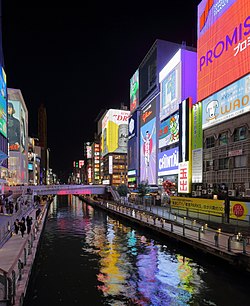
- DotonboriEntertainment districtStroller friendly6.3 kmAn entertainment street along a canal finished in 1615 and named for its digger.
- Kuromon MarketFood market streetDiaper changing table5.9 kmPufferfish and fruit out front, shop after shop, down one straight street.
- Jiyuken Namba HontenWestern-style diner6.0 kmOsaka's first Western-style restaurant, opened in Namba in 1910.




- Osaka Tennoji ZooStroller friendlyNursing spaceDiaper changing table4.4 kmTennoji Zoo is a zoo in central Osaka, open since 1915 and among Japan's oldest.
- Osaka Municipal Nagai Botanical GardenBotanical gardenStroller friendlyNursing spaceDiaper changing table2.6 kmRoses, hydrangeas, peonies: eleven collections in a botanical garden inside Nagai Park.
- Shinsekai4.5 kmShinsekai is Osaka's retro entertainment district, born in 1912 with the first Tsutenkaku observation tower.
- Hozenji Yokocho6.2 kmHozenji Yokocho is two stone-paved lanes lined with about 60 restaurants, beside a small temple.
- DotonboriEntertainment districtStroller friendly6.3 kmAn entertainment street along a canal finished in 1615 and named for its digger.
- Osaka Aquarium KaiyukanAquariumStroller friendlyNursing spaceDiaper changing table7.5 kmAn aquarium arranged by region around the Pacific Rim, holding some 620 species.
Where it is
Address: 2-9-89 Sumiyoshi, Sumiyoshi-ku, Osaka.source
Before you go
- The Sorihashi bridge is steep and stepped, and carrying a stroller over it was described as extremely difficult, so plan another way in; ordinary flat bridges on both sides are there for anyone unsure on the steps, and for a stroller see the Kofuku Gate slope below.
- For a stroller, use the slope at the Kofuku Gate: it is marked exit-only, but on January 5, 2026 a parent who asked was allowed in that way, so ask staff first. The ground around the four main halls is deep gravel, and in rain the stone paving gets slippery.
- Take a local train and walk about 3 minutes east from Sumiyoshi-taisha station on the Nankai Main Line: a 2017 travel account notes that only local trains stop there, and one family on a limited express lost 20 minutes.
- The shrine opens at 6:00 (6:30 from October to March; New Year and summer festival hours differ), the outer gate closes at 4:00 p.m. and the inner area at 5:00 p.m., and the stone hunt ends at 4:00 p.m. (its charm bags are sold from 9:00), so arrive in the morning; blessings are taken 9:00 to 15:50 with no booking.
- Eating, drinking and smoking are not allowed in the grounds, with no exception stated for baby food, so ask staff first if your child needs to eat; the charm and amulet counters are open 9:00 to 17:00 and take yen cash only, and there is no Wi-Fi. The grounds have one cafe and two vending machines (as of September 2021), and one parent has fed baby food at a cafe in the grounds; the shrine's FAQ says the coffee corner in the Kisshoden hall is closed on Wednesdays.
- Avoid December 31 to January 5: about 2 million people come over the three New Year days, the stone hunt is suspended through January 4, there are no food stalls through January 5 and the shrine parking lot is closed through January 3. On weekdays from opening to about 8:00 it is usually quiet, and a blessing on an auspicious weekend can mean over an hour's wait.
- Diaper changing tables are only in the restrooms near the north entrance and in the Kagura-den hall, not at the south parking lot, and the two nursing rooms are in the Kagura-den hall, so ask staff.
Sources and evidence (38)
- Nursing rooms: two in the Kagura-den hall used for blessings, plus the women's changing room in the Kisshoden hall; ask staff to use them.source
- Diaper changing tables are in the restrooms near the north entrance and in the Kagura-den hall, but not in the south parking lot restrooms.source
- The Osaka tourism bureau lists three accessible restrooms: south parking lot, the north vehicle gate and inside Kagura-den (another source counts them differently).source
- A lodging site says much of the grounds is flat and easy with a stroller; the Sorihashi bridge is steep and stepped.source
- With a stroller, a parent got around the gravel grounds at New Year by entering via the Kofuku Gate slope; the gravel is deep in places.source
- The shrine is mostly outdoors; the Kisshoden hall is indoors, used for the Railway Festival.source
- The shrine's FAQ says English, Traditional Chinese and Japanese paper brochures are on hand, and a grounds map can be downloaded; the Osaka tourism bureau says multilingual guidance is on the official website only, so the two sources disagree; whether English-speaking staff are present is not stated.source
- Eating, drinking and smoking are not allowed in the grounds; no exception for baby food or water is stated.source
- Visiting the shrine is free.source
- Opens at 6:00 (April to September) or 6:30 (October to March), and at 6:00 on the 1st and the first Day of the Dragon of each month; the outer gate closes at 4:00 p.m. and New Year and summer festival hours differ.source
- The outer gate closes at 4:00 p.m. and the inner area at 5:00 p.m., except during New Year and the summer festival.source
- Blessings (including for babies and ages 3, 5 and 7) are not booked ahead and are taken any time during reception hours; only ceremonies where a priest travels to you need a reservation.source
- Getting there: about a 3-minute walk east of Sumiyoshi-taisha station on the Nankai Main Line.source
- A 2017 travel account notes that only local trains stop at Sumiyoshi-taisha station on the Nankai Main Line.source
- Address: 2-9-89 Sumiyoshi, Sumiyoshi-ku, Osaka.source
- The shrine's access page asks visitors to inquire about gate hours during the New Year period and the summer festival (Sumiyoshi Matsuri).source
- The charm and amulet counters are open 9:00 to 17:00.source
- Blessing reception runs 9:00 to 15:50.source
- The stone-hunt corner is open until 4:00 p.m., and its charm bags are sold from 9:00.source
- The shrine parking lot is closed December 31 to January 3.source
- The English FAQ also asks visitors to refrain from eating, drinking and smoking in the grounds.source
- Credit cards are not accepted at the charm counters; pay in yen cash.source
- There is no Wi-Fi in the grounds.source
- About 2 million people visit over the three New Year days.source
- The stone hunt is suspended from December 31 to January 4.source
- No food stalls from December 31 to January 5.source
- The shrine's FAQ says the coffee corner in the Kisshoden hall is closed on Wednesdays.source
- The Sorihashi bridge is now stepped, and its slope is steep.source
- Weekday early mornings (opening to about 8:00) are usually quiet.source
- In rain the stone paving becomes slippery.source
- The ground around the four main halls is deep gravel.source
- The grounds have one cafe and two vending machines (as of September 2021).source
- Carrying a stroller over the Sorihashi was described as extremely difficult.source
- A visitor review says ordinary flat bridges stand on both sides of the arched bridge for anyone unsure on the steps; whether a stroller can use them is not stated.source
- The Kofuku Gate slope is marked exit-only; a parent with a stroller asked and was allowed to enter that way.source
- One parent has fed baby food at the cafe in the grounds.source
- One family on a limited express missed the stop and lost 20 minutes.source
- After reception on auspicious weekends, the wait for a blessing can exceed an hour.source
Basics
- Fee: Visiting the shrine is free.source
- Hours: Opens at 6:00 (April to September) or 6:30 (October to March), and at 6:00 on the 1st and the first Day of the Dragon of each month; the outer gate closes at 4:00 p.m. and New Year and summer festival hours differ.source
- Booking: Blessings (including for babies and ages 3, 5 and 7) are not booked ahead and are taken any time during reception hours; only ceremonies where a priest travels to you need a reservation.source
Once you've decided
evidence & sources (7)
- osaka-info.jp: Nursing space, Diaper changing table, Family restroom
- kids-stay.com: Stroller friendly
- note.com: Indoor / outdoor
- Official: English support
- Official: Outside food allowed
- Official: main site
| Nursing space | Yes | Nursing rooms: two in the Kagura-den hall used for blessings, plus the women's changing room in the Kisshoden hall; ask staff to use them. | Web-checked | checked Oct ’26 | osaka-info.jp |
|---|---|---|---|---|---|
| Diaper changing table | Yes | Diaper changing tables are in the restrooms near the north entrance and in the Kagura-den hall, but not in the south parking lot restrooms. | Web-checked | checked Oct ’26 | osaka-info.jp |
| Family restroom | Yes | The Osaka tourism bureau lists three accessible restrooms: south parking lot, the north vehicle gate and inside Kagura-den (another source counts them differently). | Web-checked | checked Oct ’26 | osaka-info.jp |
| Stroller friendly | Yes | A lodging site says much of the grounds is flat and easy with a stroller; the Sorihashi bridge is steep and stepped. | Web-checked | checked Oct ’26 | kids-stay.com |
| Lost-child supportExtra info — guide only | Not checked yet | ||||
| Indoor / outdoor | Outdoor | The shrine is mostly outdoors; the Kisshoden hall is indoors, used for the Railway Festival. | Web-checked | checked Sep ’26 | note.com |
| Diaper disposal bin | Not checked yet | ||||
| Kids' toilet seat & step stool | Not checked yet | ||||
| Elevator | Not checked yet | ||||
| English support | English menu & signs | The shrine's FAQ says English, Traditional Chinese and Japanese paper brochures are on hand, and a grounds map can be downloaded; the Osaka tourism bureau says multilingual guidance is on the official website only, so the two sources disagree; whether English-speaking staff are present is not stated. | Web-checked | checked Oct ’26 | sumiyoshitaisha.net |
| Outside food allowed | No | Eating, drinking and smoking are not allowed in the grounds; no exception for baby food or water is stated. | Web-checked | checked May ’18 | sumiyoshitaisha.net |
| Official family-friendly certificationExtra info — guide only | Not checked yet | ||||
| High chair | Not checked yet | ||||
| Kids' menu | Not checked yet | ||||
| Best-fit ages (guide)Extra info — guide only | Not checked yet |